Commercial kitchens move fast. Fryers spit, grills flare, and steam gathers beneath the hood. A dependable Hood Filter helps capture airborne grease before it travels deeper into the exhaust system. The right choice can also support cleaner ductwork and more predictable maintenance. But no filter solves every kitchen’s ventilation needs.
This guide compares 10 options for different cooking volumes, hood designs, and cleaning routines. It considers practical details such as filter dimensions, construction, grease-handling design, and manufacturer guidance. A stainless-steel baffle filter may suit a busy line, while another setup may call for a different approved style. Fit matters. So does airflow. Check product specifications against your existing hood before buying, and confirm that the filter is compatible with the equipment and ventilation plan.
A tidy ranking can hide a messy reality: performance depends on installation, upkeep, and what gets cooked each day. Even a well-made filter can disappoint if it is poorly fitted or neglected. This list is a starting point, not a substitute for a qualified assessment. Compare cleaning instructions, replacement availability, and stated performance claims carefully. Where details are unclear, ask the manufacturer or a ventilation professional. The best choice is the one that fits your kitchen’s actual conditions, not just the one with the most impressive product description.
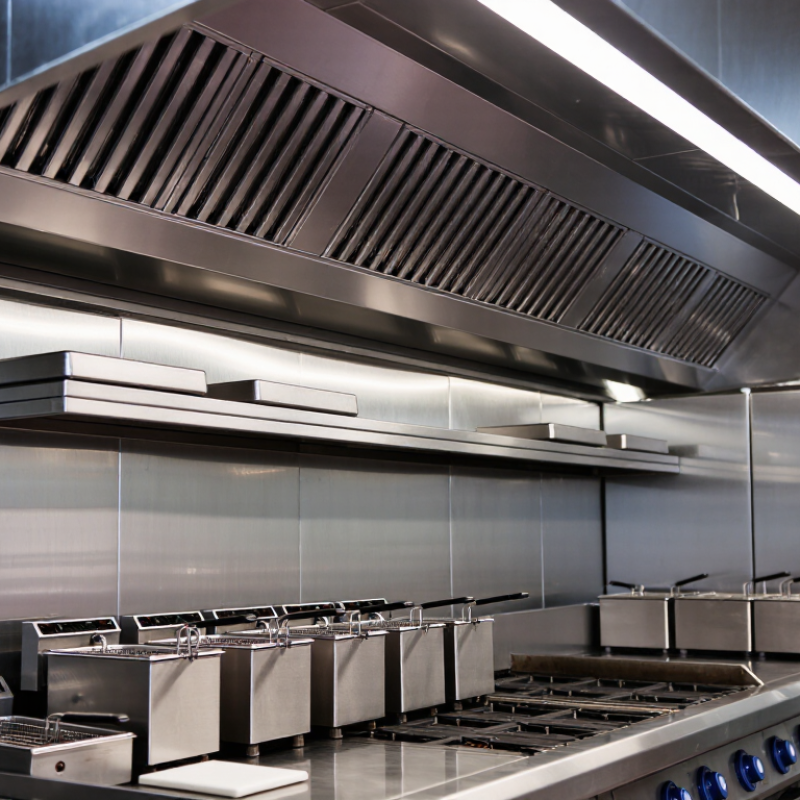
Understanding Hood Filters in Commercial Kitchens
A hood filter is not just a metal screen above the range. In a commercial kitchen, it captures grease droplets before they enter the exhaust duct, while allowing air and heat to move toward the hood. Baffle filters redirect airflow through angled metal channels; grease collects on their surfaces and drains into a collection system. A filter that is clogged, damaged, or poorly seated can reduce airflow and let more grease travel downstream. Small gaps matter.
The National Fire Protection Association’s report, Structure Fires in Eating and Drinking Establishments, estimates that cooking equipment was involved in 61% of reported restaurant fires in 2017–2021. That figure covers many kinds of cooking-related incidents; it does not mean filters alone prevent fires. Still, it shows why grease control deserves routine attention. Check for visible buildup, secure fit, and bent baffles. Follow the hood system’s instructions and applicable fire-safety guidance when setting cleaning intervals.
Cooking patterns change the maintenance load. A fryer-heavy line can soil filters faster than a kitchen that mostly boils or steams, so a fixed calendar may not be enough. That takes judgment. Keep a simple cleaning log, inspect filters under good light, and replace units that no longer fit or drain properly. Filters are not magic, and even a clean one cannot correct weak exhaust design. That distinction is easy to overlook.
Commercial hood filters work by changing the path of rising air. As grease-laden air passes through angled baffles, heavier droplets strike the metal surfaces. They collect, merge, and drain toward the filter’s lower edge. The filter does not simply “吸” grease from the air; its shape and steady airflow help separate droplets. That distinction matters.
Smoke is more complicated. Some visible smoke contains tiny grease particles that a properly fitted baffle filter can capture, but fine particles and odor gases may pass through. Not all smoke. A filter is only one part of the hood system, and its performance depends on suitable airflow, correct installation, and clean surfaces. If the filter is clogged, air may bypass it or move less effectively.
In daily kitchen use, check for greasy film, blocked drain channels, and loose seating around the filter. A thin coating can build up quickly near fryers and griddles. Clean filters using the equipment maker’s instructions, then let them dry before reinstalling. I’ve seen a filter look acceptable from the front while grease remained packed between its baffles. Visual checks help, but they are not perfect; regular inspection and a consistent cleaning record offer a clearer picture.
Commercial kitchen hood filters differ in how they capture grease, handle airflow, and tolerate cleaning. Baffle filters use angled metal plates to redirect air. Grease hits the plates, drains into a collection channel, and is less likely to pass into the duct. They are sturdy and common over busy cooking lines. Their weight can make removal awkward, especially when filters are hot or overhead.
Mesh filters trap grease across layers of metal mesh. They are lighter and may suit lower-volume equipment, but can clog quickly above fryers or grills. A clogged filter restricts airflow and needs prompt cleaning. Small detail, big effect. Charcoal filters target odors rather than serving as the main grease barrier. They are often used with other filtration, and their odor-control material needs replacement when it becomes saturated.
Some systems use water-wash or specialized filters, which can reduce manual cleaning but add equipment and upkeep. The best choice depends on cooking style, hood design, and the manufacturer’s specifications. A filter that works well over a simmering range may struggle over a fryer. Categories can blur in real kitchens, too; performance depends on fit, airflow, and consistent maintenance. Check for secure seating and visible grease buildup during routine inspections.
| Filter type | How it works | Best suited for | Key advantages | Trade-offs and care |
|---|---|---|---|---|
| 1. Stainless-steel baffle | Angled baffles change the airflow direction, causing grease droplets to separate and drain into collection channels. | Many commercial cooking lines, including kitchens with frequent frying or grilling. | Durable, non-combustible, and generally easier to clean than layered mesh; commonly used in commercial hoods. | Heavier and often more expensive than aluminum. Clean regularly; fit and performance depend on the hood design. |
| 2. Aluminum baffle | Uses the same directional-flow principle as other baffle filters to capture grease droplets. | Applications where a lighter-weight baffle is suitable and accepted by the hood specification. | Lightweight and typically easy to remove for cleaning. | Can dent or corrode more readily than stainless steel, depending on alloy, finish, and cleaning chemicals. Confirm suitability with the hood manufacturer and local requirements. |
| 3. Galvanized-steel baffle | Uses shaped metal baffles to redirect exhaust air and separate grease. | Installations where a galvanized-steel filter is specified and compatible with the system. | Can be a practical metal-filter option where its material and construction meet project needs. | The coating can be damaged by abrasion or unsuitable chemicals. Check the filter’s condition and follow its cleaning instructions. |
| 4. Wire-mesh grease filter | Layers of mesh intercept grease as air passes through the filter. | Light-duty or specialty applications where the hood and applicable requirements specifically allow mesh filters. | Simple construction and widely understood cleaning method. | Mesh can load with grease and may be harder to clean thoroughly. It is not a universal substitute for a listed baffle filter in commercial cooking exhaust. |
| 5. High-efficiency baffle | A baffle design engineered to improve grease separation while managing airflow resistance. | Grease-producing cooking where the hood system is designed and rated for the selected filter. | Can improve grease capture compared with a basic design when tested under comparable conditions. | “High efficiency” is not a universal performance rating. Compare test data, pressure drop, dimensions, and system compatibility rather than relying on the label alone. |
| 6. Multi-bank baffle assembly | Two or more baffle stages are arranged in the exhaust path to provide additional grease separation. | Hoods designed for staged filtration or applications with higher grease loading. | Provides more than one separation stage within a compatible hood arrangement. | Adds resistance to airflow and requires space. The exhaust system must be sized for the assembly, and each stage needs routine cleaning. |
| 7. Centrifugal grease extractor | Uses centrifugal action to separate grease from the moving airstream, often as part of a purpose-built extractor unit. | Specialized systems designed for this type of grease-extraction equipment. | Can separate grease through a mechanism different from a conventional removable baffle. | Not a drop-in replacement for standard hood filters. Requires compatible equipment, installation, and maintenance procedures. |
| 8. Water-wash filtration system | A built-in wash system periodically sprays water, often with detergent, across the hood’s grease-extraction components. | Purpose-designed hoods with suitable water, drainage, and control connections. | Automates part of the grease-cleaning process and can reduce manual cleaning frequency for compatible equipment. | It is a system, not a universal replacement filter. It still needs inspection and maintenance and does not eliminate duct cleaning. |
| 9. Activated-carbon odor filter | Porous carbon adsorbs some odor compounds as air passes through it. | Odor-control applications, usually as a downstream stage after grease filtration. | Can help reduce certain odors when correctly sized and maintained. | Does not replace a grease filter. Carbon becomes exhausted, and humidity, airflow, and contaminant levels affect service life. |
| 10. Electrostatic precipitator (ESP) | An electrical field charges and collects fine particles on collector plates; it is typically installed as a separate air-cleaning stage. | Engineered exhaust systems needing additional particulate control after grease extraction. | Can capture fine particles that may pass through a conventional grease filter. | It is not a standard hood filter or a substitute for grease filtration. Collector plates need cleaning, and system design and local approval matter. |
Selection note: Choose filters compatible with the hood and exhaust system, and verify applicable fire, building, and health-code requirements. Filter performance depends on its tested rating, fit, airflow, cooking duty, and maintenance.
Criteria for evaluating ten best hood filters start with how well each unit captures grease under realistic cooking conditions. A filter must match the hood’s size and airflow requirements; a poor fit can leave gaps around the edges. Look for clear specifications on material, dimensions, and operating limits. Stainless steel baffle filters are often suited to busy kitchens because their channels redirect grease into collection areas. Mesh filters may be lighter, but their performance depends heavily on construction and maintenance. No filter works well when clogged.
Pressure drop matters, too. A filter that restricts airflow can affect ventilation, so compare its resistance with the hood’s requirements rather than judging it by appearance. Check whether it can be removed safely and cleaned without special tools. In daily use, greasy corners and warped frames are easy to overlook. Fit matters. Durability should be assessed through frame strength, weld quality, and resistance to repeated washing. Ask for test data or technical documentation when available, and confirm that the filter is intended for the specific hood system. A low price may look appealing, but replacement frequency and cleaning time change the real cost. There is no perfect choice; kitchen volume, cooking style, and staff routines can shift the ranking.
Install hood filters only after checking the hood’s specified size and filter type. A filter that sits loosely can let grease bypass its baffles. Follow the equipment instructions for orientation, seating, and safe access. Keep the grease trough clear, too. It is easy to rush this step. NFPA’s report on eating and drinking establishment fires estimated 7,410 structure fires annually in 2017–2021; cooking equipment was involved in 61 percent. Filters do not prevent every fire, but proper fit and upkeep help limit grease buildup in the exhaust system.
Set cleaning intervals using cooking volume and the applicable edition of NFPA 96. Its schedule calls for monthly cleaning with solid-fuel cooking, quarterly for high-volume operations, semiannually for moderate-volume operations, and annually for low-volume operations. Local requirements or heavier buildup may call for more frequent service. Remove filters carefully, degrease them with a suitable solution, rinse, and let them dry completely before reinstalling. Never force a warped filter into place. Check for corrosion, loose seams, or damaged baffles; replace filters that no longer fit securely or drain grease properly. A quick visual check helps, but it cannot replace scheduled cleaning.