7 Best Stage LED Screen Rental Companies for Events

Choosing a stage LED screen rental company is not just about comparing prices. The right screen must suit the venue, viewing distance, lighting, and show format. A bright display can look impressive in a warehouse, yet feel overwhelming in a small ballroom. Pixel pitch matters. So do screen dimensions, refresh rate, and the way content will appear on camera. Small details, big impact.

This guide introduces seven companies that provide LED screen rentals for events, from corporate presentations to concerts and festivals. It highlights practical questions to ask about equipment, delivery, setup, on-site technicians, and backup plans. Ask for a clear quote that explains what is included, such as processors, rigging, cables, and labor. Request examples of similar events, too. Photos help, but they may not show how a screen performs under stage lights or during a live camera feed. No single provider is ideal for every event, and availability can change by location and date. That part is easy to overlook. Compare each company against your venue plan and budget, then confirm technical details directly before booking. A polished proposal is useful, but a specific, realistic plan is better.
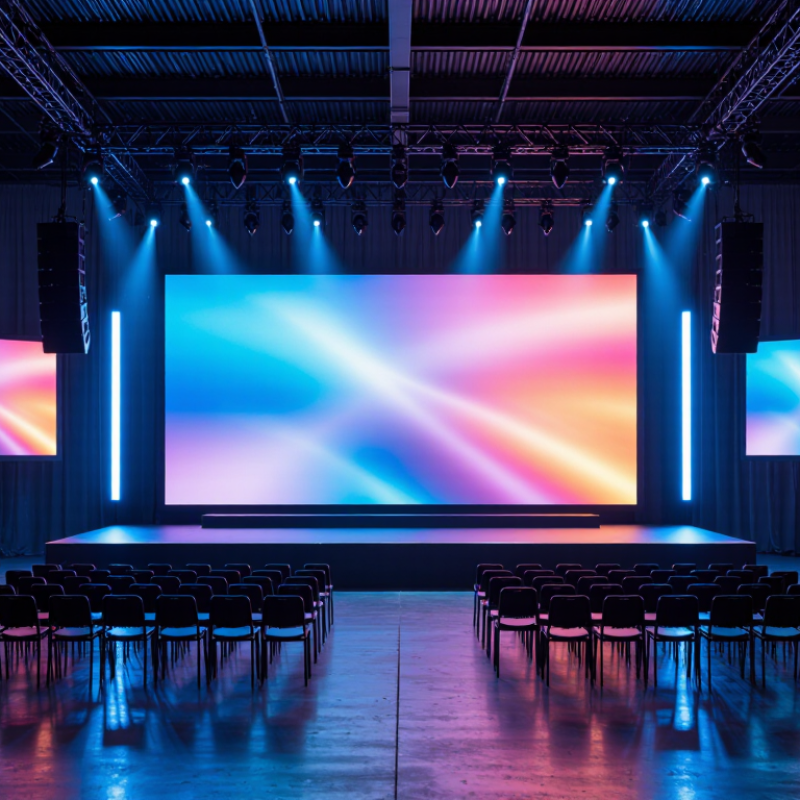
7 Best Stage LED Screen Rental Companies for Events

Understanding Stage LED Screen Rentals for Events

Stage LED screen rental is more than hiring a large display. It usually includes panels, processing equipment, support structures, cabling, delivery, setup, and on-site technicians. Confirm what the quote covers. A low price may exclude installation or show-day support.

Start with the venue and audience. A screen viewed from the back of a ballroom needs different pixel spacing from one used on a small stage. Ask for a layout that shows screen dimensions, viewing distances, and sightlines. Brightness matters, too: daylight and stage lighting can wash out an image. Indoors, excessive brightness may feel harsh. Small details count.

The screen must work with the event’s video sources and playback plan. Check resolutions, connection types, backup playback, and who handles last-minute changes. Also confirm access times, rigging requirements, power needs, and whether the structure suits the venue. For outdoor events, ask how the equipment is protected from weather. Even a good plan can miss a cable route or an obstructed view, so a site visit is useful. I would not assume every package includes the same support; request a written equipment and labor list before comparing rental options.

Key Factors for Evaluating Rental Companies

A strong stage LED screen rental company asks about the room before recommending equipment. Share the stage dimensions, audience distance, lighting conditions, and content format. Pixel pitch affects how sharp text and faces look up close. Brightness matters when daylight or strong stage lights compete with the image. Ask how the proposed screen and processing system will handle your specific setup. Ask for proof, not just promises.

Check whether the company provides a site survey, clear drawings, and an experienced on-site technician. The plan should show screen dimensions, cable routes, power needs, and mounting points. Request details about backup panels and replacement procedures; a spare module is useful only if someone can install it quickly. Review the rental agreement for delivery times, setup responsibilities, testing, and breakdown. If possible, ask to see recent event footage or speak with a past client. A brief test with your actual video files can reveal color shifts, flicker, or awkward cropping. Small oversights happen—even in polished productions—so leave time for a full rehearsal.

Profiles of Seven Stage LED Screen Rental Companies

A full-service rental company typically supplies LED panels, processors, rigging, and on-site technicians. Its crew can manage delivery, setup, and testing. Ask how it handles a failed panel during a live show. A practical fit. The trade-off may be a higher quote when labor and backup equipment are included.

A touring-focused provider builds screens for repeated setup and teardown. It may offer road cases, clear cable plans, and crews used to tight changeovers. A modular-screen specialist, by contrast, can shape displays around unusual stages or narrow venues. Confirm pixel pitch and viewing distance; a bright screen is not always a sharp screen. Details matter.

A corporate-event supplier often supports conferences, product launches, and indoor presentations, where readable text is essential. An outdoor-event company may prioritize weather-rated equipment, daylight visibility, and secure mounting. A creative production rental team can coordinate curved screens or animated content, though content approvals may take longer than expected. A regional, budget-minded provider may suit smaller events with straightforward layouts. Its inventory can be limited, so check availability early. No profile is perfect: compare recent event references, written specifications, setup windows, and the named scope of technical support before booking.

7 Best Stage LED Screen Rental Companies for Events — Profiles of Seven Stage LED Screen Rental Companies
The profiles below describe common rental-provider specializations, not named or independently verified companies. Pixel-pitch ranges are typical examples; actual inventory, specifications, availability, and service scope must be confirmed with each provider.
Profile Best-Fit Event Common Screen Setup Typical Pixel Pitch Indoor / Outdoor Considerations Services to Compare Key Checks Before Booking
1. Indoor Concert Specialist Concert stages, award shows, and indoor corporate productions Main backdrop, side screens, or modular scenic panels Indoor panels commonly range from about 1.5 mm to 3.9 mm Indoor panels are not automatically suitable for rain or direct sunlight; confirm the intended operating environment. Screen configuration, video processing, installation, operation, and strike Confirm viewing distances, screen dimensions, input formats, and whether a technician is included.
2. Outdoor Festival Specialist Festivals, outdoor concerts, and public events Large stage wall, delay screens, or side-stage displays Outdoor panels commonly range from about 3.9 mm to 10 mm Ask for the panel’s stated ingress-protection rating and operating limits; weather resistance does not mean protection in every condition. Outdoor-rated equipment, rigging coordination, signal distribution, and on-site support Check power requirements, weather plan, wind-load responsibilities, and local rigging approvals.
3. Touring and Modular-Rig Specialist Touring productions and events with tight changeover schedules Modular cabinets assembled into repeatable wall sizes and shapes Depends on the cabinet inventory; confirm the exact pitch offered for the booking. Suitability depends on the specific indoor or outdoor panel model, not simply on modular construction. Pre-rig planning, load-in and strike crew, spares, and show-day troubleshooting Ask about compatible cabinet inventory, spare-panel quantities, and setup time at the venue.
4. Corporate Presentation Specialist Conferences, product launches, and general-session presentations Center-stage screen, confidence displays, or supporting side screens Indoor pitches commonly fall within approximately 1.5 mm to 3.9 mm. For bright rooms or window-facing stages, confirm brightness requirements and whether ambient light affects readability. Playback and presentation support, signal routing, screen operation, and rehearsal assistance Verify resolution, aspect ratio, laptop connections, backup playback, and rehearsal availability.
5. Multi-Screen Production Specialist Events requiring a main screen plus multiple auxiliary displays Coordinated main wall, side screens, IMAG displays, or lobby screens Pitch can vary by screen location and viewing distance; request specifications for each display. Mixed indoor and outdoor deployments require confirmation that each panel type suits its location. Signal distribution, screen mapping, video processing, and coordinated operation Confirm the number of independent feeds, processor capacity, cable paths, and backup signal plan.
6. Scenic and Creative-Shape Specialist Brand activations, immersive stages, and custom scenic designs Curved, angled, portrait, or other non-standard modular layouts Depends on the available cabinet design and the content viewing distance. Ask whether the selected cabinets and connectors are rated for the proposed configuration and environment. Design coordination, layout drawings, content-mapping guidance, and installation Request a build plan, confirm pixel-map dimensions, and check content-format requirements early.
7. Regional Full-Service Event Specialist Local events seeking a single supplier for screen and production services Stage screen package sized to the venue and event production plan Available pitch varies by inventory; compare the offered pitch with audience distance. Confirm the exact panel model and environmental rating for the venue and event dates. Delivery, installation, operation, strike, and potentially related audio or lighting services Review the itemized quote, crew schedule, insurance requirements, cancellation terms, and contingency plan.

Comparing Equipment, Services, and Pricing

Comparing seven stage LED screen rental companies means looking beyond the quoted screen size. Check pixel pitch, brightness, refresh rate, and whether the panels suit the viewing distance. A tighter pixel pitch can sharpen close-up footage, while outdoor events need screens bright enough for daylight. Ask for a drawing of the proposed wall, including its dimensions and support structure. Small details matter.

Services can separate a smooth rental from a stressful one. Confirm whether delivery, rigging, signal testing, an on-site technician, and dismantling are included. Ask who supplies processors, cables, backup panels, and playback support. A detailed equipment list is more useful than a broad promise of “full service.” Still, even careful plans can miss a venue constraint, such as limited load-in access.

Pricing comparisons should use the same event dates, screen dimensions, service hours, and installation requirements. Request an itemized quote showing transport, labor, overtime, and any damage deposit. The lowest total may exclude essential support. Check cancellation terms and when final payment is due, too. Rates can vary sharply by location and season, so published estimates are only a starting point. When a quote feels unusually simple, ask what it leaves out.

7 LED Wall Pixel-Pitch Options for Event Rentals

Equipment comparison: pixel pitch and approximate minimum viewing distance

A common planning rule of thumb is that the approximate minimum viewing distance in meters is similar to the pixel pitch in millimeters. These are indicative equipment-planning values, not prices or performance claims for specific rental companies. Confirm the right option with your supplier based on venue, content, and viewing conditions.

Planning a Stage LED Screen Rental for Your Event

Planning a stage LED screen rental starts with sightlines, not pixel pitch. Measure the farthest seat, stage width, camera positions, and available rigging points before requesting quotes. AVIXA’s 2024 Industry Outlook projects global professional audiovisual revenue at $325 billion by 2029, showing the scale of this technical sector. Ask providers to specify screen dimensions, pixel pitch, brightness, processing, and backup plans in writing. Request a viewing-distance sketch; a dense display can still look poor from a side aisle. Small details matter.

The Events Industry Council and Oxford Economics estimated $1.6 trillion in direct business-event spending worldwide in 2019. That figure is historical, but it conveys the sector’s scale. During a venue walk-through, check power access, loading routes, ambient light, and views from accessible seating. Confirm who handles rigging, signal distribution, playback, and troubleshooting. Rehearse with the actual show file; it can reveal awkward cropping or unreadable text. One question worth asking: does the screen genuinely help the audience, or merely fill the stage? Compare quotes by labor hours, setup windows, spare modules, and strike timing—not price alone.

Update: We are here, we are shipping = bring extra natural light into your home during these difficult times.
Go to Top