What Is a China Chandeliers Supplier and How to Choose One?

Choosing the right China Chandeliers Supplier can shape a project’s appearance, budget, and installation experience. A chandelier is not merely a decorative object. Its frame, finish, wiring, crystal quality, and packaging all influence the final result. Buyers may notice a beautiful catalog first, but hidden details often matter more.

An experienced sourcing process should examine the supplier’s manufacturing capability, product consistency, and communication habits. Ask for factory photos, material specifications, test reports, and recent project references. Request a physical sample when possible. Check the metal thickness, surface finish, socket quality, ceiling plate, and cable length. Details matter. A supplier that answers clearly is easier to manage when designs change or delays occur.

Price deserves careful interpretation. A very low quotation may exclude export packaging, replacement parts, testing, or installation guidance. That assumption can fail. Compare complete offers instead of comparing one unit price. Confirm minimum order quantities, production time, inspection procedures, payment terms, and after-sales support. The supplier should also understand the electrical and safety requirements of the destination market. Standards vary, and attractive lighting is not useful if it cannot be installed safely.

A reliable China Chandeliers Supplier will usually provide transparent documents and realistic timelines. Still, no supplier is perfect. Even a strong factory may make mistakes in color matching or custom dimensions. Keep written specifications, approve drawings, and define correction responsibilities before production. Good judgment comes from checking evidence, not trusting polished promises.
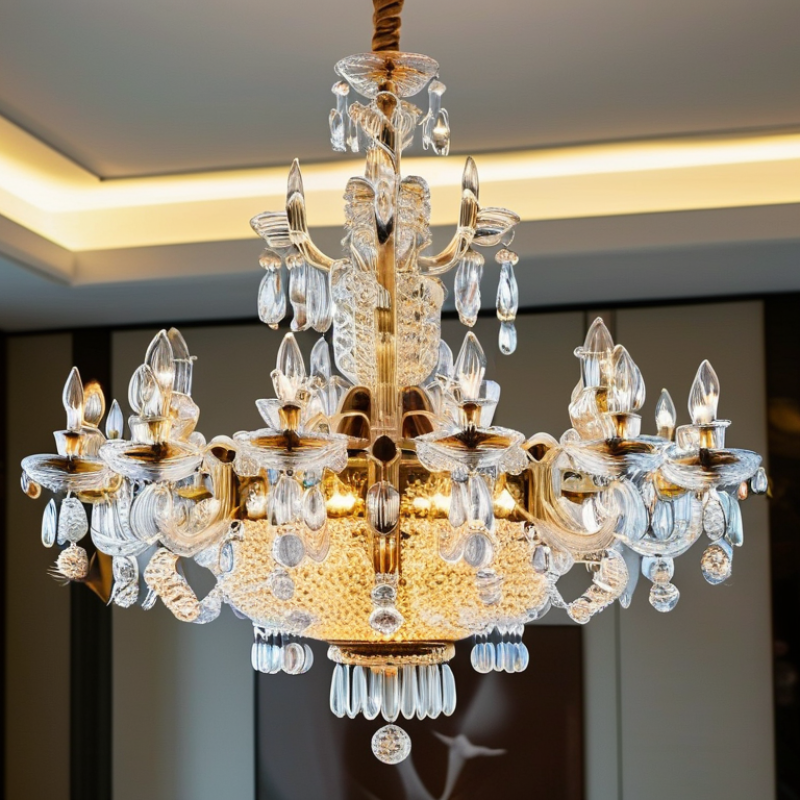
What Is a China Chandeliers Supplier and How to Choose One?

What Is a China Chandeliers Supplier?

What Is a China Chandeliers Supplier?

A China chandeliers supplier is a China-based manufacturer, exporter, or wholesale partner specializing in decorative lighting. It may produce crystal, glass, metal, or customized chandeliers. Some suppliers only trade products. Others control design, cutting, assembly, packaging, and export documentation. This difference matters.

The market is substantial. Grand View Research valued the global lighting fixtures market at about USD 130.8 billion in 2023. Its report also projects an 8.7% compound annual growth rate from 2024 to 2030. These figures include chandeliers, commercial fixtures, and residential lighting. They show strong demand, but they do not prove that every supplier is reliable.

A capable supplier should provide clear drawings, material specifications, wattage details, and installation instructions. Ask for close-up photos of welds, sockets, finishes, and protective packaging. A practical factory audit can confirm production capacity and quality procedures. Sample approval is essential. I once underestimated packaging quality; a beautiful fixture arrived with scratched metal and broken glass. That mistake was costly. It also showed why product inspection should cover both appearance and electrical components.

Check the supplier’s experience with international shipments. Request recent test reports, inspection records, and references from comparable projects. Verify lead times in writing. Confirm whether replacement parts are available. Low prices can hide weaker plating, thinner metal, or inconsistent crystal grading. The best choice is not always the cheapest one. Supplier selection requires evidence, not attractive catalog images.

What Products and Services Do China Chandeliers Suppliers Offer?

China chandeliers suppliers typically provide more than finished ceiling fixtures. Their product ranges may include crystal chandeliers, metal frames, pendant lights, wall lamps, and custom hospitality lighting.

Many factories offer CAD drawings, sample production, finish matching, adjustable dimensions, and private packaging. A useful supplier should explain socket types, voltage options, weight limits, and installation requirements clearly.

The U.S. Department of Energy reports that LED lighting uses at least 75% less energy and can last up to 25 times longer than incandescent lighting.

Therefore, experienced suppliers should offer LED-compatible designs, driver specifications, and replacement-part support. The International Energy Agency also estimates that lighting represents about 15% of global electricity consumption. Efficient lighting is not a small detail.

Ask for test reports, material specifications, and documented quality-control procedures. These may include incoming-material checks, wiring tests, and final inspection photographs.

I would not trust a polished catalog alone. Request a physical sample, especially when the fixture has hand-finished metal or multiple glass pieces.

Suppliers may support installation manuals, export packaging, spare components, and after-sales communication, but service quality can vary. Confirm the minimum order quantity, production schedule, warranty terms, and inspection process in writing.

A supplier can still miss a small shade difference. That is why approved samples and measurable tolerances matter.

Look for practical evidence: stable production records, responsive technical staff, and consistent reports from previous commercial projects.

How Does the China Chandelier Sourcing Process Work?

A China chandelier supplier is a manufacturer or sourcing partner that develops, produces, and exports decorative lighting. The sourcing process begins with a clear product brief. Include dimensions, finish, lamp quantity, voltage, ceiling height, and target order volume. Photos help, but measured drawings work better. Small details matter.

Suppliers usually review the brief and prepare a quotation. The quotation should separate product cost, packaging, tooling, and shipping. Ask for material specifications, production time, warranty terms, and compliance documents for the destination market. A reliable supplier can explain its workshop process, wiring methods, and inspection procedures without vague promises. Request a sample or prototype before placing a larger order. Check the metal joints, crystal attachment, canopy strength, cable length, and surface finish under bright light. Do not skip this step.

Factory verification may include reviewing equipment, production records, and quality-control staff. A video call can reveal useful details, although it cannot replace an independent inspection. Before shipment, inspectors should check dimensions, color consistency, electrical components, carton protection, and the approved sample. Strong packaging should prevent movement inside the box. That part is often underestimated. Confirm shipping terms and import documents early, because delays can begin with one missing paper. I have found that the cheapest quotation is rarely the clearest choice. A lower price may hide thinner materials, weaker packaging, or repeated revisions. Good sourcing is not perfectly smooth; it requires questions, written records, and occasional reconsideration.

What Is a China Chandelier Supplier and How to Choose One? - How Does the China Chandelier Sourcing Process Work?

Sourcing Stage What a Reliable Supplier Should Provide Typical Information or Range Buyer Checkpoint Common Evidence
1. Product Definition A clear quotation based on the required chandelier type, dimensions, finish, light source, and installation conditions. Product type may include pendant, linear, flush-mount, or multi-tier chandelier. Key dimensions are diameter, height, canopy size, and hanging length. Confirm that the specification matches the project drawings and ceiling height. Technical drawing, product specification sheet, material list, and quotation.
2. Supplier Screening Verifiable business information, production capability, quality procedures, export experience, and responsive communication. Review company registration details, factory or workshop capacity, inspection process, and previous project experience without relying only on online listings. Use at least three comparable quotations and check whether specifications, packaging, and trade terms are stated consistently. Business license copy, factory audit report, production photos, inspection records, and customer references where available.
3. Design and Customization Support for changes to size, finish, number of lights, suspension system, color temperature, and control method. Custom work generally requires approved drawings, material confirmation, finish samples, and a defined revision process. Approve one controlled drawing revision before production and identify all non-standard components. Signed or digitally approved drawings, finish samples, lighting schedule, and change-order record.
4. Sample and Prototype A physical sample, finish sample, or prototype when appearance, fit, or construction cannot be verified from drawings alone. Sample approval should cover dimensions, surface finish, wiring layout, light distribution, suspension parts, and visible hardware. Record deviations and make the approved sample the reference standard for mass production. Sample approval form, photographs with measurements, test report, and signed deviation list.
5. Electrical and Safety Review Electrical specifications suitable for the destination market, including voltage, frequency, lamp or LED details, grounding, and installation instructions. Common supply systems include 220–240 V at 50 Hz and 110–120 V at 60 Hz, depending on the destination. Requirements must be confirmed for the project location. Verify compatibility with local regulations, dimming systems, ceiling loads, and licensed installation requirements. Wiring diagram, component datasheets, insulation or continuity test results, installation manual, and applicable conformity documents.
6. Commercial Terms A written offer showing product price, tooling or sampling charges, packaging, payment terms, trade term, validity period, and exclusions. Frequently used trade terms include EXW, FOB, CIF, and DDP; the exact cost and risk allocation differs for each term. Compare total landed cost rather than unit price alone, including freight, insurance, duties, taxes, inspection, and installation parts. Pro forma invoice, purchase contract, packing requirements, payment schedule, and agreed Incoterm.
7. Production Planning A production schedule covering material purchasing, fabrication, finishing, assembly, testing, packing, and shipment readiness. Lead time varies by design complexity, order quantity, customization, component availability, and seasonal production load. Set milestone dates and require early notice for material shortages, design changes, or delays. Production schedule, material confirmation, progress photographs, and milestone report.
8. Quality Inspection A documented inspection system covering quantity, dimensions, finish, assembly, electrical safety, accessories, and packaging. Inspection may be performed before production, during production, before shipment, or through an independent third party. Define acceptable tolerances, defect categories, inspection sampling method, and corrective-action requirements in advance. Pre-shipment inspection report, measurement records, defect photographs, corrective-action report, and carton count.
9. Packaging and Logistics Protective packaging designed for fragile metal, glass, crystal, acrylic, or other decorative components, with clear carton identification. Packaging should separate delicate parts, prevent movement, control moisture exposure, and include installation hardware and spare components where agreed. Confirm carton dimensions, gross and net weights, stacking limits, shipping marks, and insurance responsibility. Packing list, commercial invoice, carton photographs, shipping marks, and transport documents.
10. Delivery and Installation Support Clear installation instructions, parts labeling, replacement-part support, and timely assistance with damaged or missing components. Large or multi-tier chandeliers may require site coordination, ceiling reinforcement review, and professional installation. Check the shipment immediately after arrival and document visible damage before signing transport records where applicable. Installation manual, assembly diagram, spare-parts list, warranty terms, and after-sales contact procedure.
11. Final Supplier Selection A supplier that balances product quality, communication, compliance, production control, delivery reliability, and total cost. A practical evaluation can score price, quality, customization, compliance, lead time, packaging, communication, and after-sales support on a weighted basis. Select the supplier with the strongest overall risk-adjusted value, not necessarily the lowest quotation. Completed supplier scorecard, approved contract, quality agreement, delivery schedule, and documented risk review.
Key selection principle: Evaluate a China chandelier supplier by documented capability, product compliance, communication, inspection control, packaging quality, delivery reliability, and total landed cost.

What Factors Should You Consider When Choosing a Supplier?

A China chandelier supplier is a manufacturer, exporter, or sourcing company that provides decorative lighting from China. Choosing one requires more than comparing catalog prices. The International Energy Agency reports that lighting uses about 15% of global electricity. Therefore, ask for lumen output, wattage, driver efficiency, and verified test results. A beautiful fixture can still waste energy.

Inspect the supplier’s factory or request an independent audit. Check production equipment, wiring processes, quality records, and worker safety procedures. Confirm whether samples match mass production. Ask for material specifications, corrosion testing, load testing, and packaging photos. Certifications should be suitable for your target market, not copied into a sales file. ISO 9001 certification can indicate structured quality management, but it does not guarantee every chandelier is flawless.

Review the commercial details carefully. Compare minimum order quantities, mold charges, spare-part policies, lead times, payment terms, and warranty coverage. Request a written process for handling damaged glass, missing components, and color differences. The 2023 World Bank Logistics Performance Index shows that transport reliability varies significantly between countries and supply chains. Build realistic delivery time into your project plan. A low quote may exclude inspection, export packaging, or replacement parts. I would not trust fast replies alone. Slow technical answers are a warning, but quick promises can be worse. Ask for a pilot order, measure its defects, and record what the supplier fails to explain.

What Is a China Chandelier Supplier and How to Choose One?

This illustrative buyer evaluation model assigns a 100-point total to the main factors that should be reviewed when selecting a China chandelier supplier. Product quality and certification receive the highest weighting, followed by customization capability, pricing transparency, production capacity, logistics, communication, and the sample process.

How Can You Verify Supplier Quality, Pricing, and Reliability?

A China chandeliers supplier may be a factory, trading company, or design-focused workshop. This difference affects pricing, control, and communication. Ask for a registered company profile and a clear production address. Then request recent workshop photos or a live video inspection. A serious supplier should explain metal types, crystal grades, wiring, finishes, and installation methods. Vague answers deserve caution. Small details matter.

Quality verification should begin with a paid sample, not attractive catalog images. Check the chandelier’s weight, frame joints, surface coating, socket fit, cable labeling, and packaging strength. Request test reports and documents required for your destination market. These may cover electrical safety, materials, and energy performance. I once treated polished photos as proof of quality, and that was a poor assumption. A sample can still hide production variation, so inspect several units when possible.

Compare quotations line by line. Confirm whether prices include packaging, inspection, customization, shipping terms, taxes, and replacement parts. An unusually low quote may exclude essential components. Ask for a written production schedule with payment stages and approval points. Contact recent customers, preferably with similar order sizes and project requirements. Reliability appears in response speed, document accuracy, and how problems are handled. Delays happen, but silence is a serious warning. Keep every specification in writing, including dimensions, color temperature, voltage, carton markings, and acceptable defect limits.

Update: We are here, we are shipping = bring extra natural light into your home during these difficult times.
Go to Top