Choosing a reliable morning lamp manufacturer in China requires more than comparing factory prices. Global buyers must examine product safety, light performance, production consistency, and communication quality. This guide introduces ten manufacturers worth evaluating for international sourcing projects. It considers factory experience, research capability, export records, and manufacturing scale. These factors can reveal more than attractive catalog images.
A dependable supplier should explain color temperature, brightness levels, timer settings, battery options, and charging methods clearly. Buyers should also request samples before placing larger orders. A sample can expose uneven light diffusion, weak buttons, noisy alarms, or unstable charging. Small details matter. Product documentation should match the physical item. Certificates, test reports, and compliance claims also require independent verification for the destination market.
The selected companies may serve different needs. Some focus on consumer electronics, while others support private labeling and customized designs. Their minimum order quantities, tooling policies, packaging options, and lead times can vary significantly. Real manufacturing experience is useful here, but it is not perfect evidence. A factory may perform well on one project and struggle on another. Buyers should ask direct questions, inspect recent production samples, and confirm after-sales support in writing.
This overview is designed as a practical starting point, not a final purchasing decision. Market conditions change. Supplier capabilities change too. Careful verification remains essential.
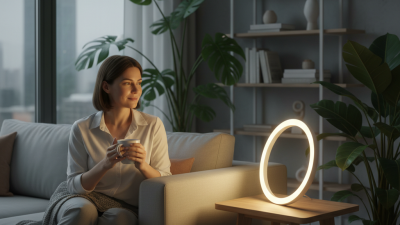
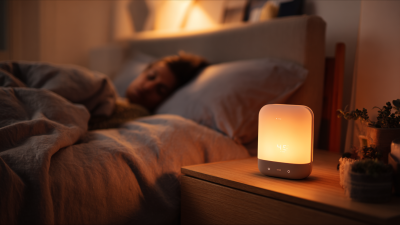
Morning lamps imitate the gradual brightness of sunrise, helping users wake more gently than a sudden alarm. They usually combine warm LEDs, adjustable brightness, timers, and simple controls. Some models also include nature sounds or color-changing settings. Light matters. A carefully designed lamp can make a dark bedroom feel calmer during winter mornings or early work shifts.
Chinese manufacturers attract global buyers through mature electronics supply chains and flexible production capabilities. Many factories can source LEDs, plastic housings, circuit boards, and packaging within nearby industrial regions. This can shorten development time and support practical customization. Buyers may request different plug types, language settings, colors, materials, or control methods. Factory engineers can also adjust light diffusion, button placement, and timer accuracy after sample testing.
Reliable sourcing still requires careful inspection. Ask for production samples, safety test reports, component details, and quality-control records relevant to the destination market. Check whether the lamp maintains stable brightness after repeated use, because attractive samples can hide weak components. The process is not flawless. Communication delays, revised molds, and inconsistent color temperature sometimes appear between samples and mass production. A written specification, pre-shipment inspection, and clear corrective process can reduce these risks. Chinese manufacturers can offer strong value, but buyers should compare evidence rather than trust low prices alone.
Evaluating China’s morning lamp manufacturers requires more than comparing catalog prices. Start with measurable light performance. Ask for tested illuminance at a stated distance, correlated color temperature, color rendering, and flicker results. A lamp claiming 10,000 lux may reach that level only at 20 centimeters. That detail changes the buying decision. The U.S. Department of Energy reports that LED lighting can use at least 75% less energy and last up to 25 times longer than incandescent lighting. However, efficiency alone does not prove comfortable morning use.
Request independent reports covering electrical safety, photobiological risk, and electromagnetic compatibility. IEC 62471 testing helps assess optical radiation hazards, while IEC 60598-1 addresses general luminaire safety. The International Energy Agency has repeatedly identified lighting as a major electricity-use category, so efficient drivers and standby performance deserve attention. Check whether test reports match the exact model, not a similar sample. Verify the laboratory, test date, and operating conditions. Paperwork can look convincing.
Factory experience matters most during sample approval. Examine diffuser uniformity, heat buildup, switch durability, and cable strain relief. Ask how calibration is controlled across production batches. A factory audit should include incoming LED inspection and final photometric checks. ISO 9001 certification supports process control, but it cannot replace product testing. I would also review three consecutive samples, not just one perfect unit. My own checklist once ignored adapter quality, which caused unnecessary returns. That mistake is easy to repeat. Clear warranty terms, spare-part access, packaging tests, and responsive technical communication reveal a manufacturer’s real reliability.
China’s leading morning lamp manufacturers serve different buyer needs, from basic bedside lights to app-connected sunrise alarms. One Shenzhen factory focuses on compact LED models with warm, gradual brightness. A Ningbo manufacturer supplies sturdy ABS housings and quiet buttons for hotels. A Dongguan producer specializes in custom molds and private-label packaging. A Suzhou workshop develops lamps with natural sound options and adjustable color temperature. A Xiamen supplier emphasizes rechargeable designs for travel and small bedrooms.
A Hangzhou manufacturer offers app control, but software testing deserves close attention. A Zhongshan producer makes affordable plastic lamps for large retail orders. A Foshan factory combines wood-look finishes with simple electronic controls. A Wenzhou supplier supports flexible minimum order quantities for emerging businesses. A Jiangsu manufacturer provides stronger quality documentation, including inspection records and aging-test reports. These profiles reflect production strengths, not automatic guarantees. Factory visits and sample testing still matter.
Tips: Request three samples from different batches. Check light timing, alarm volume, button feel, cable safety, and surface temperature. Ask for compliance documents relevant to your market. Confirm packaging drop tests before shipment. I once underestimated software consistency; the lamp looked excellent, but its mobile pairing failed repeatedly. That mistake remains useful. Test the ordinary details, not only the attractive design.
Reference benchmark of commonly documented morning-lamp specifications and OEM capabilities. The figures are aggregated for the featured manufacturer group and do not disclose company or brand-level data.
The benchmark highlights the product and sourcing factors most relevant to international buyers, including sunrise simulation, adjustable lighting, alarm functions, customization, and export readiness.
China Top 10 Morning Lamp Manufacturers for Global Buyers
The leading Chinese morning-lamp suppliers differ sharply in product design. Some focus on sunrise simulation, while others prioritize reading light and compact bedside use. Better models provide adjustable color temperature, gradual brightness changes, quiet alarms, and backup batteries. These details matter during early-morning use.
The U.S. Department of Energy reports that quality LEDs use at least 75% less energy and last up to 25 times longer than incandescent lamps. Buyers should still request flicker-test results, not only lumen claims. A useful sample should show stable brightness through dimming. It should also maintain accurate color rendering, especially for bedrooms and children’s rooms. Look for documented testing under IEC 60598 requirements.
Production capability separates serious factories from simple assemblers. Established suppliers often control PCB design, injection molding, optical testing, aging tests, and final assembly. This improves consistency between the first sample and later shipments. However, a polished sample can still mislead. I would request a three-batch comparison, including charging time, alarm accuracy, and thermal performance. The IEA’s energy-efficiency reporting continues to emphasize efficient lighting as a practical energy-saving measure, but efficiency alone cannot prove product quality. A low-cost lamp may pass basic operation while suffering from loose buttons, uneven light, or weak packaging. That risk deserves more attention.
| Rank | Anonymous Supplier Profile | Core Product Focus | Typical Light Source | Color Temperature | Color Rendering | Key Product Features | Quality & Testing Capability | Common Compliance Coverage | Estimated Monthly Capacity | OEM/ODM Capability | Typical MOQ | Typical Lead Time | Best Fit for Global Buyers |
|---|---|---|---|---|---|---|---|---|---|---|---|---|---|
| 1 | Supplier Profile A | Premium sunrise alarm lamps | High-efficiency SMD LED array | 1,800–6,500 K adjustable | CRI 90+ on selected models | Gradual sunrise simulation Natural sunset mode USB charging App-enabled options | Strong: aging tests, photometric checks, electrical safety testing, production traceability | CE, RoHS, EMC, FCC for applicable markets; UKCA available on request | 30,000–80,000 units/month | Full OEM/ODM; industrial design and firmware customization | 500–1,000 units | 25–40 days | Premium retail, e-commerce, wellness, and private-label programs |
| 2 | Supplier Profile B | Smart connected wake-up lamps | RGBW LED module | 2,200–6,500 K adjustable | CRI 80–90, model dependent | Wi-Fi/Bluetooth Voice-control compatibility Multiple alarms Music playback | Strong: firmware validation, RF testing, thermal testing, automated functional testing | CE, RoHS, FCC, RED for wireless versions; regional requirements vary | 20,000–60,000 units/month | Full OEM/ODM; app, firmware, housing, and packaging customization | 1,000–2,000 units | 30–45 days | Connected-home brands and technology-focused distributors |
| 3 | Supplier Profile C | Mid-range sunrise alarm clocks | White LED plus RGB accent LEDs | 2,700–6,500 K adjustable | CRI 80+ | LCD display Dual alarms Snooze function Nature sounds | Good: incoming inspection, assembly testing, sample aging, finished-product inspection | CE, RoHS, EMC, FCC on selected export models | 40,000–100,000 units/month | Standard OEM/ODM; moderate tooling and software changes | 500–1,000 units | 20–35 days | Large-volume online retail and mid-market private labels |
| 4 | Supplier Profile D | Minimalist bedside morning lamps | COB or SMD LED | 2,700–4,000 K; limited tunable options | CRI 80+ | Touch control Compact housing Memory function Low-noise operation | Good: optical inspection, electrical safety checks, drop testing on selected products | CE, RoHS, EMC; UL-compatible components may be available | 25,000–70,000 units/month | OEM-ready; color, logo, packaging, and minor structural changes | 300–800 units | 20–35 days | Home décor, lifestyle, hospitality, and gift channels |
| 5 | Supplier Profile E | Budget multifunction alarm lamps | Basic SMD LED | 3,000–6,500 K; preset modes | CRI 70–80 | Digital clock FM radio options Sound alarm Simple dimming | Standard: basic functional testing and sampling inspection; buyer audits recommended | CE, RoHS; FCC documentation depends on wireless and radio functions | 50,000–150,000 units/month | Standard OEM; limited tooling and firmware customization | 1,000–3,000 units | 18–30 days | Value retail, promotional programs, and high-volume marketplaces |
| 6 | Supplier Profile F | Children’s morning and sleep-training lamps | Low-voltage LED module | 2,700–6,500 K adjustable | CRI 80+ | Child-safe controls Night-light mode Timer settings Soft-touch housing | Good: low-voltage verification, material checks, surface-temperature testing, functional inspection | CE, RoHS, EMC; additional child-product requirements may apply by destination | 15,000–50,000 units/month | OEM/ODM available; character-free designs and custom interfaces | 500–1,500 units | 25–40 days | Parenting, education, sleep-support, and family-care channels |
| 7 | Supplier Profile G | Portable rechargeable morning lamps | Energy-efficient SMD LED | 2,700–6,500 K adjustable | CRI 80+ | Lithium battery USB-C charging Portable design Power-bank options | Good: battery protection testing, charging-cycle checks, thermal testing, leakage inspection | CE, RoHS, EMC, FCC; UN38.3 and transport documentation for lithium-battery shipments | 20,000–60,000 units/month | OEM/ODM; battery, housing, firmware, and packaging options | 500–1,000 units | 30–45 days | Travel, outdoor lifestyle, emergency-lighting, and mobile retail |
| 8 | Supplier Profile H | Wooden and decorative bedside lamps | LED filament or SMD LED | 2,200–4,000 K; mainly warm white | CRI 80–90 | Wood or fabric finishes Decorative styling Touch dimming Gift packaging | Standard to good: appearance inspection, electrical testing, finish inspection, batch sampling | CE, RoHS, EMC; material and finish documentation varies by model | 10,000–35,000 units/month | OEM/ODM; strong focus on finishes, colors, and packaging | 300–1,000 units | 30–50 days | Interior design, hospitality, boutique retail, and seasonal gifting |
| 9 | Supplier Profile I | Commercial and institutional wake-up lamps | High-output LED board | 2,700–6,500 K adjustable | CRI 80–90 | Long operating life Centralized settings Durable enclosure Bulk packaging | Strong: process control, reliability testing, batch records, and inspection documentation | CE, RoHS, EMC, FCC where applicable; destination-specific approvals require confirmation | 30,000–90,000 units/month | OEM/ODM; suitable for institutional specifications and large purchase orders | 1,000–3,000 units | 30–45 days | Hotels, clinics, employee-wellness programs, and contract distribution |
| 10 | Supplier Profile J | Entry-level private-label morning lamps | Basic LED light engine | 3,000–6,500 K; preset or two-step control | CRI 70–80 | Simple alarm Basic dimming Compact packaging Cost-focused design | Standard: routine assembly testing and sampling inspection; independent pre-shipment inspection advisable | CE, RoHS; other certifications depend on electrical design and destination market | 60,000–180,000 units/month | Basic OEM; logo, color, packaging, and limited component changes | 1,000–5,000 units | 15–30 days | New brands, test orders, promotional campaigns, and price-sensitive markets |
When comparing China’s top ten morning lamp manufacturers, buyers should inspect performance, not catalogue quantity. The International Energy Agency reports that LED lighting can use up to 75% less energy than incandescent lighting. However, lower power consumption does not guarantee comfortable morning use. Request measured data for colour temperature, colour rendering, brightness stability, and flicker. A useful sample should provide a gradual 2,700K-to-6,500K transition, quiet controls, and consistent output across several units.
Ask each supplier for factory-audit records, product test reports, and evidence of quality-control procedures. The U.S. Department of Energy’s solid-state lighting research shows that efficacy and thermal management strongly affect long-term performance. Therefore, inspect heat dissipation, adapter safety, battery protection, and LED lifespan claims. Do not accept “50,000 hours” without test conditions. That figure can mislead.
Small details matter. Test the lamp beside a bed, not only inside a showroom. Check whether the display remains bright at night. Confirm packaging strength through drop testing, especially for sea freight. Also compare minimum order quantities, spare-part access, lead times, and response speed. Grand View Research’s 2024 analysis projects strong growth in smart lighting, but connectivity can create extra failure points. Wi-Fi is not always better. I would keep the first order modest and repeat the same sample test. A polished audit can still miss a loose charging port. That is worth remembering.