Choosing an Amart Coffee Table in 2026 starts with your room, not a trend photo. Measure the sofa’s length, seat height, and walking space before comparing shapes. A table that looks compact online may crowd the path between the couch and television. Small details matter. Measure twice. Then check the product dimensions and materials, rather than judging by a styled image alone.
Interior designer Nate Berkus has said, “Your home should tell the story of who you are, and be a collection of what you love.” That idea can guide a practical choice: pick a finish and shape that feel at home with your existing furniture, while considering how the table will be used each day. Do you need a broad surface for books and cups, a shelf for remotes, or rounded corners for a busy family room? Think about cleaning, too; textured finishes may need more attention than smooth ones. Not always. A beautiful piece can still be awkward if it blocks movement or sits at the wrong height. This guide explores size, shape, materials, storage, styling, and value to help you compare Amart Coffee Table options with care. Product ranges and availability can change, so confirm current details before buying. Your first choice may not be perfect—and that is worth thinking through. A few careful measurements can prevent a costly mismatch.
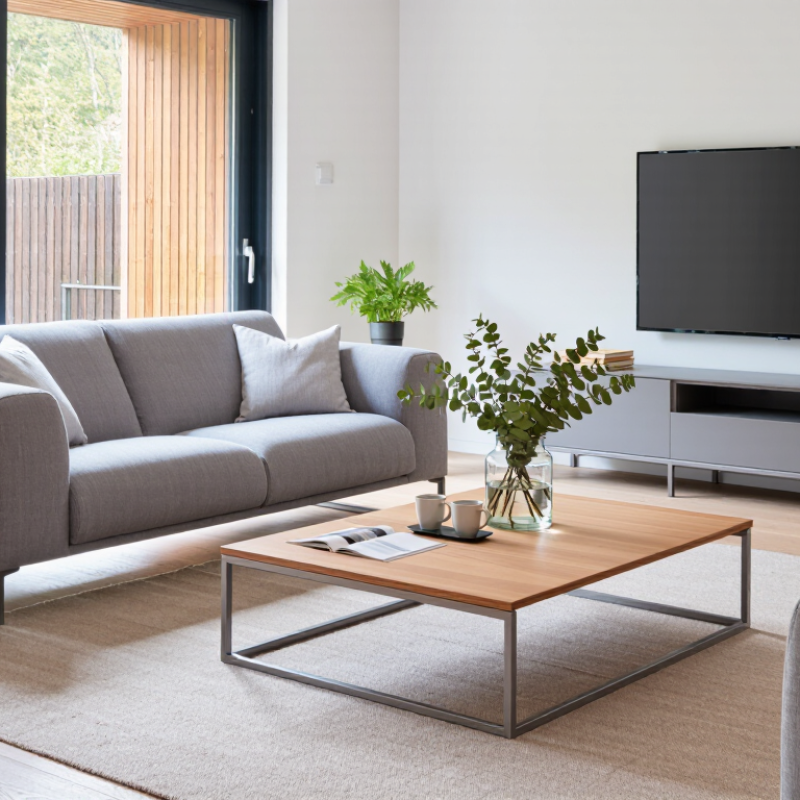
Measure the space between the sofa’s front edge and the coffee table’s nearest edge. A practical starting point is 36–46 cm (14–18 inches). This gap lets you reach a drink while leaving room to stand and walk past. Too close, and knees may bump the table. Too far, and the tabletop becomes awkward to use.
Use a tape measure before shopping, and mark the proposed table position with books or removable tape. Sit down and check the reach from your usual seat. Try walking through the space, too. Small test. The 36–46 cm guideline is not a rule for every room; deep sofas, mobility needs, and narrow walkways can change what feels comfortable. If the table has a wide base, measure its closest point, not just the tabletop edge. I’d also recheck the gap after placing a rug, since its edge can make the space feel tighter than expected. A few centimetres can matter.
A coffee table should sit comfortably beside your sofa, not compete with it. Measure from the floor to the top of the seat cushion where you actually sit. Choose a tabletop about 2.5–5 cm lower. That small difference makes a mug or book easy to reach without making the table feel imposing. Measure with the cushion in its usual state; soft cushions can compress noticeably when occupied.
Check the fit while seated, too. A tape measure beside the sofa helps, but a stack of books can give you a quick sense of the height. Leave enough room for your knees and for walking past the table. Around 35–45 cm between the sofa and table often feels practical, though room layout matters. I’d resist treating the measurement as a strict rule: a very low sofa may pair better with a slightly taller table, especially if reaching down feels awkward. I’ve found that looks can mislead. A table that seems perfectly proportioned while standing may feel inconvenient once you sit.
A practical starting point is to choose a coffee table about two-thirds as long as your sofa. For an 84-inch sofa, that means a table near 56 inches; for a 90-inch sofa, aim around 60 inches. This proportion usually looks balanced and leaves the sofa’s ends visible. It also gives more people a reachable spot for a mug or book.
Measure the room, too. A long table can still feel cramped if it blocks the path between the sofa and a doorway.
The ratio is a guide, not a rule carved in stone. Check the actual walking space before ordering. The U.S. Access Board’s Guide to the ADA Accessibility Standards specifies a 36-inch minimum clear width for accessible routes. That is a useful circulation benchmark, though it is not a required gap between every sofa and table.
In a narrow room, a shorter or oval table may preserve a clearer route. I would tape the proposed tabletop outline on the floor and walk around it. It can look slightly awkward at first.
That is worth noticing: room shape, sofa arms, and daily habits may matter more than a neat ratio.
A well-chosen coffee table should fit the room, suit daily use, and have a clearly stated load limit. Compare solid wood, veneer, glass, and metal by more than appearance. Wood feels warm but can respond to humidity; glass shows fingerprints, while metal may scratch hard flooring.
The USDA Forest Products Laboratory’s Wood Handbook reports typical wood shrinkage of about 3–5% across the grain and 6–10% along it, from green to oven-dry. That’s a useful reminder: keep wood away from strong heat and direct sun. A glossy finish can look striking, but it may reveal every small mark.
Measure your sofa before comparing dimensions. A practical starting point is a table about half to two-thirds of the sofa’s length, with a height near the seat cushion. Check whether the stated capacity applies to the top, a lower shelf, or both. Also ask whether it assumes evenly distributed weight; a heavy object on one corner creates a different load.
ANSI/BIFMA X5.5-2021 covers strength and stability testing for certain tables, but a test standard is not a substitute for the product’s own rating. Choosing by finish alone is an easy mistake.
Before paying, read the warranty for its duration, exclusions, and claim process. Check whether it covers defects in materials and workmanship, and who pays return freight. In Australia, a store warranty sits alongside consumer guarantees under Australian Consumer Law; it should not be treated as your only remedy. Keep the receipt and save a copy of the warranty. Easy to forget.
Delivery terms can change the real cost. Confirm whether the table will arrive at your door or inside your home, and ask about stairs, regional surcharges, assembly, and packaging removal. If the box is damaged, photograph it before unpacking and report the problem promptly. I’d check the delivery window against work or access arrangements, even if that feels overly cautious.
Look for the table’s specific safety information, including weight limits, care instructions, and any stability warnings. For a glass top, check the product documentation for the glass type and handling guidance; appearance alone tells you little. Review current Australian product-safety notices for relevant recalls, too. A small detail can matter: measure the walkway and intended spot, then check the table’s clearance from heaters and busy paths. I still find that last check easy to overlook.