How to Choose the Best PU Leather Door Handle?
Choosing the best Pu Leather Door Handle requires more than matching a color to a door. The handle must feel comfortable, remain stable, and suit the room’s daily use. A soft brown finish may look warm in a bedroom, yet it can appear dull beside bright metal hardware. Texture matters too. Fine grain hides fingerprints better than a smooth, glossy surface.
Materials and product-design expert Chris Lefteri often emphasizes, “Materials are not just what a product is made from; they help define how it is experienced.” This principle fits every Pu Leather Door Handle selection. The surface should feel consistent across the grip, without loose edges, sharp seams, or an unpleasant chemical smell. A reliable handle also needs a firm internal structure. Attractive wrapping cannot repair a weak core.
Check the details closely.
Measure the door thickness, mounting position, and handle clearance before ordering. Then examine the polyurethane coating, stitching, backing material, and fastening system. Some products look luxurious in photographs but feel thin after installation. That mistake is easy to make. I would also question vague claims such as “premium leather” when the product is clearly synthetic. Honest specifications build greater trust.
This guide will compare comfort, durability, appearance, maintenance, and installation. It will also consider bedrooms, offices, hotels, and high-use entrances separately. No handle is perfect. A design that feels elegant may require gentler cleaning, while a tougher finish may look less refined. The best Pu Leather Door Handle balances these compromises for the door, space, and people using it every day.
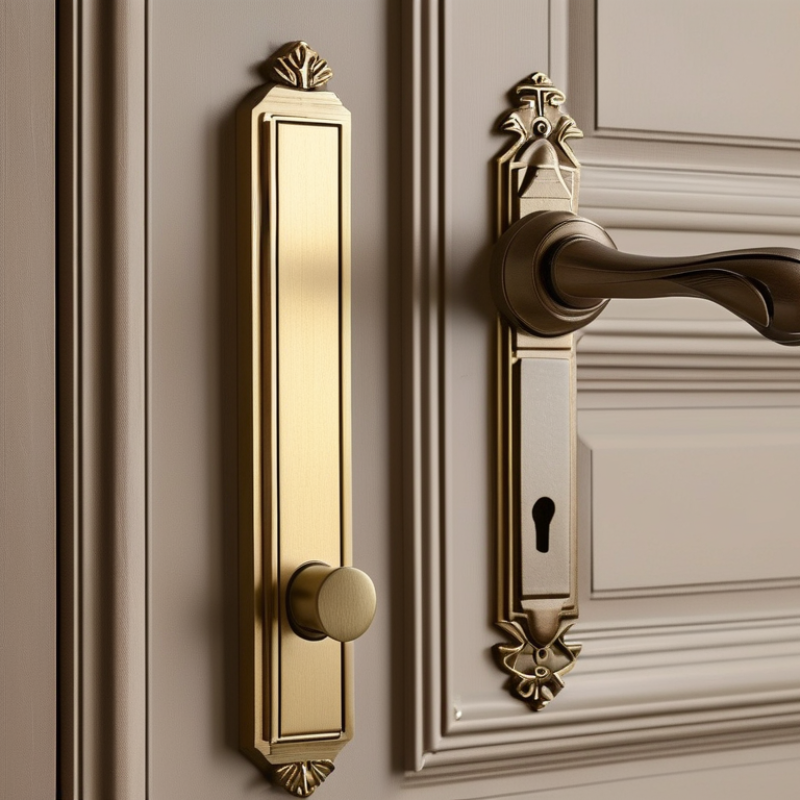
Define PU Leather Types, Grain, Thickness, and ISO 2419 Flexibility
How to Choose the Best PU Leather Door Handle?
PU leather is not one uniform material. Common options include coated split leather, fully synthetic PU, and microfiber PU. Their structures differ. Coated leather usually feels warmer, while microfiber PU offers more consistent thickness. The grain also matters. Embossed grain creates a regular pattern. Natural-looking grain hides small surface marks better. For door handles, a practical starting range is 0.8–1.5 mm, depending on the handle shape and backing fabric. Thicker material can resist abrasion, but it may fold poorly around tight corners. MarketsandMarkets reported that the synthetic leather market could grow from about USD 31.9 billion in 2021 to USD 45.5 billion by 2027. This growth reflects wider material use, not automatic quality.
Tips: Request a technical sheet, not only a color sample. Check thickness at several points. Hold the sample around a handle. Look for whitening, cracking, or loose grain. I have seen attractive samples fail after repeated folding. Appearance can mislead.
ISO 2419 does not provide a simple flexibility grade. It defines specimen preparation and conditioning before physical testing. Ask for the conditioning details and a flexing result under ISO 5402-1 or another stated method. A reliable supplier should identify the test temperature, humidity, cycle count, and failure point. For high-use handles, compare abrasion, peel strength, and flex resistance together. One weakness can cancel another advantage. Also inspect the adhesive and backing cloth. PU film alone cannot explain performance. Some choices remain imperfect. Door geometry, cleaning frequency, and installation tension can change the result.
Measure Door Use Frequency Against ISO 12947 Martindale Abrasion Cycles
Choosing the best PU leather door handle starts with measuring real door use. Count opening cycles during a typical week, including busy morning periods. A private bedroom may see fewer than 20 uses daily. A shared office door can exceed 100.
ISO 12947 Martindale abrasion cycles provide a useful durability reference. The test rubs a material against an abrasive surface under controlled pressure. Higher cycles usually indicate better resistance to surface wear. However, this result does not perfectly reproduce a hand gripping a handle. Skin oils, moisture, rings, and repeated twisting create different stresses. Check whether the supplier tested the actual PU leather construction, not only a separate fabric layer.
Match the cycle rating to usage and maintenance habits. For light residential use, moderate abrasion resistance may be practical. High-traffic entrances need stronger PU leather, reinforced edges, and stable stitching. Inspect sample handles after repeated rubbing, especially around seams and corners. Look for gloss changes, peeling, cracking, or exposed backing. Small details matter.
I would also record cleaning exposure. Some surfaces tolerate gentle soap but react poorly to alcohol-based products. That part is often overlooked.
A simple usage log can improve the decision, although it will never replace laboratory testing. A handle used 80 times daily may experience more wear from careless pulling than from normal contact. Consider comfort too, because a highly durable surface can still feel hot, slippery, or artificial in the hand.
Compare Tensile Strength, Tear Resistance, and EN 16139 Durability Data
How to Choose the Best PU Leather Door Handle?
Tensile strength shows how much pulling force the PU leather can withstand before breaking. Tear resistance measures whether a small cut spreads under stress. These values are different. A handle may record high tensile strength, yet fail after a sharp edge creates a weak point. For coated fabrics, ISO 1421 measures tensile strength, while ISO 4674-1 evaluates tear resistance. Published laboratory data for commercial PU upholstery materials often reports tensile strength near 10–25 MPa and tear resistance around 30–80 N. Treat these figures as screening ranges, not universal requirements.
Ask for test results from the finished handle, not only loose leather samples. Check thickness, backing fabric, grain direction, conditioning temperature, and failure location. EN 16139:2013+A1:2017 provides strength, durability, and safety methods for non-domestic seating. Its demanding durability testing can be useful for comparing handle assemblies, especially when repeated pulling and rubbing are simulated. However, EN 16139 does not automatically certify a door handle. The mounting plate, stitching, adhesive, and screw area must also survive the test. A 100,000-cycle result is meaningful only when the laboratory explains the load, fixture, and acceptance criteria. I would question any report showing only “passed.” Raw force curves matter. Small details matter more. One overlooked weakness is moisture exposure, which can soften PU coatings and loosen bonded layers over time. resistance around 30–80 N. Treat these figures as screening ranges, not universal requirements.
Ask for test results from the finished handle, not only loose leather samples. Check thickness, backing fabric, grain direction, conditioning temperature, and failure location. EN 16139:2013+A1:2017 provides strength, durability, and safety methods for non-domestic seating. Its demanding durability testing can be useful for comparing handle assemblies, especially when repeated pulling and rubbing are simulated. However, EN 16139 does not automatically certify a door handle. The mounting plate, stitching, adhesive, and screw area must also survive the test. A 100,000-cycle result is meaningful only when the laboratory explains the load, fixture, and acceptance criteria. I would question any report showing only “passed.” Raw force curves matter. Small details matter more. One overlooked weakness is moisture exposure, which can soften PU coatings and loosen bonded layers over time.
Verify Handle Size, Ergonomics, Mounting, Warranty, and Cost per Year
Choosing the best PU leather door handle starts with measurements, not appearance. Record the backset, door thickness, rose diameter, and handle projection. A mismatch can leave exposed holes or a loose latch. The 2010 ADA Standards specify operable hardware between 34 and 48 inches above the finished floor. They also recommend no tight grasping, pinching, or twisting. Test the handle with a closed fist. It should feel stable, warm, and easy to control.
Mounting quality matters more than soft wrapping. Check whether the handle uses through-bolts, concealed screws, or a simple wood-screw plate. Through-bolts usually resist repeated pulling better on hollow or composite doors. Confirm the supplied spindle length before installation. A short spindle creates movement. A long one can damage the latch. Keep the PU leather away from sharp plate edges. Small details matter.
Warranty terms need careful reading. Look for coverage against peeling, seam failure, discoloration, and loose fittings. Exclusions may be more important than the headline period. Estimate cost per year with this formula: purchase price plus installation, divided by expected service years. ISO 15686-5 identifies life-cycle costing as a method for comparing initial and future costs. A cheaper handle lasting two years may cost more annually than a durable handle lasting six. Still, service-life estimates are imperfect. Humidity, cleaning chemicals, and heavy traffic can change the result. Test one sample first.
