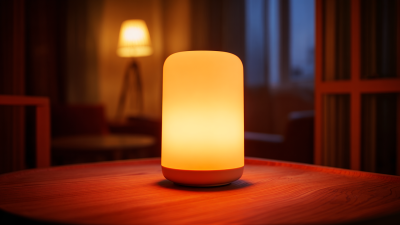
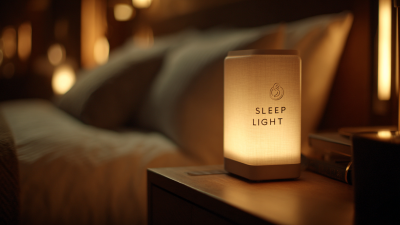
Global buyers are looking beyond traditional flames when choosing a candle lamp. They want atmosphere, safety, portability, and dependable operating costs. Grand View Research valued the global candle market at approximately USD 12.88 billion in 2022. Its report also projected a 5.7% compound annual growth rate from 2023 to 2030. These figures show continuing demand for decorative lighting, although they do not measure electric candle lamps separately.
That distinction matters. A candle lamp may use LED technology, rechargeable batteries, solar charging, or a real wax shell. LED candle lamps suit hotels, restaurants, and homes requiring low heat and repeated use. Rechargeable table lamps support outdoor dining and flexible event layouts. Solar models can serve gardens, balconies, and regions with unstable grid access. Flameless wax lamps offer a convincing surface texture, especially when their flicker pattern avoids looking too mechanical.
The market is broad.
Buyers should compare brightness, color temperature, battery life, ingress protection, charging standards, and replacement availability. The U.S. Department of Energy identifies LED lighting as highly energy-efficient and long-lasting, but product performance still depends on electronics and battery quality. Reports from Fortune Business Insights and Grand View Research indicate strong growth across decorative lighting and candle-related categories, yet category definitions vary between studies. That weakness deserves attention. A reported market size may include wax candles, holders, and decorative accessories, not only a candle lamp. Responsible sourcing therefore requires sample testing, documented specifications, packaging checks, and supplier verification. The best choice is not always the brightest model. It is the model that remains attractive, safe, practical, and commercially reliable after months of real use.
What Are the Top Candle Lamp Types for Global Buyers?
A candle lamp is a lighting product shaped like a candle flame or candle body. It may use an LED, rechargeable battery, or low-voltage circuit. The term is not perfectly standardized. Some sellers mean candle-shaped bulbs, while others mean complete decorative lamps. Buyers should check the socket, voltage, battery capacity, and operating temperature before ordering.
The most common type is the LED candle bulb. Its semiconductor converts electrical energy into light, while a flame-tip diffuser creates a softer appearance. The International Energy Agency reported that LEDs represented about half of global lighting sales in 2022. This supports their growing role in residential and hospitality lighting. LED candle bulbs suit chandeliers, wall fixtures, and table lamps. Their light may look too sharp without a frosted cover.
Rechargeable flameless candle lamps use LEDs, batteries, and charging circuits. Many include timers or adjustable brightness. They are useful for restaurants, bedrooms, and outdoor sheltered areas. Battery performance changes with temperature and charging habits. That detail is often overlooked.
Solar candle lamps add a small photovoltaic panel and storage battery. The panel charges during daylight, then powers the LED after sunset. The International Renewable Energy Agency reported that global renewable capacity reached 3,870 GW in 2023, showing stronger interest in distributed energy systems. However, solar lamps can disappoint during cloudy seasons. Plug-in candle lamps remain more predictable indoors. Product testing should include heat, flicker, charging cycles, and electrical safety, not only appearance.
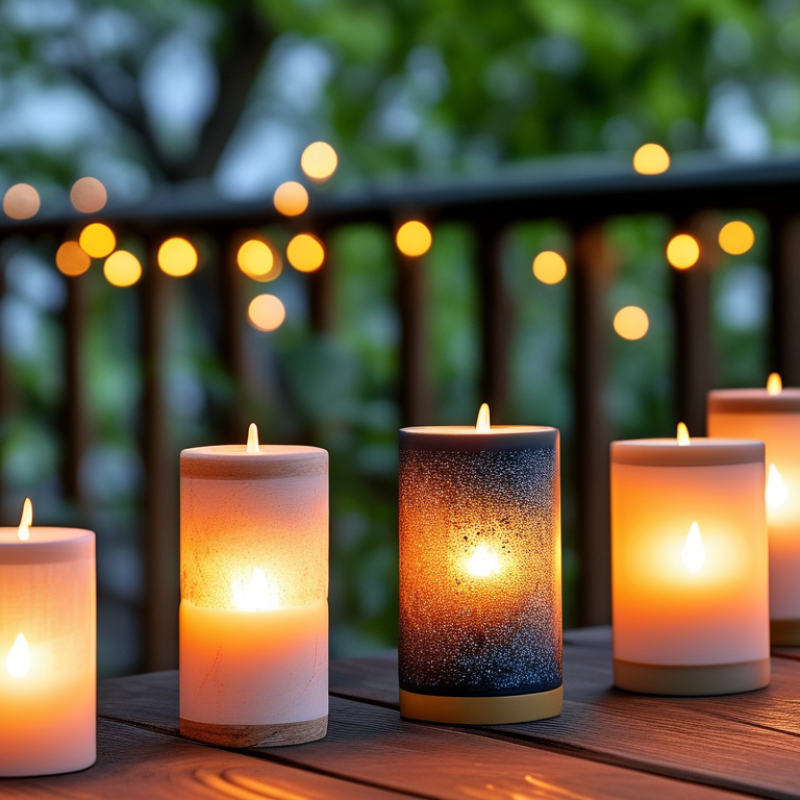
Global buyers can choose from several candle lamp types, each suited to different spaces and operating conditions. Flameless LED candle lamps offer a realistic glow without an open flame. Battery-powered models work well for restaurants, hotels, and event tables. Rechargeable USB lamps reduce disposable battery waste and suit cafés, bedrooms, and portable displays. Solar candle lamps are useful for balconies and gardens, but cloudy weather can reduce their runtime.
Traditional wax candle lamps remain available for buyers who prefer scent, texture, and a natural flame. They create warmer visual movement, although they require careful placement and regular replacement. Electric candle lamps with dimming controls provide better consistency for hospitality projects. Some models include remote controls or timers, while others use touch switches. Small details matter. A bright blue-white LED can make a dining table feel cold.
Product selection should include more than appearance. Buyers should check voltage compatibility, plug type, charging time, battery replacement options, and material safety documents. Outdoor models need an appropriate water-resistance rating, but that rating does not permit immersion. Import rules may also affect lithium battery shipments and electrical products in different markets. Suppliers should provide clear test reports and user instructions.
There is no perfect type. A rechargeable lamp may seem efficient, yet its battery can weaken after repeated charging. Wax looks authentic, but heat and cleaning requirements may increase operating costs. Test samples in the intended environment before placing a large order. Five minutes of testing can reveal more than polished product photos.
In product comparisons, I assess candle lamps by function before judging their appearance. A tabletop candle lamp usually creates a warm pool of light for dining areas, bedrooms, and reception desks. Its compact base improves placement, but a narrow base may tip easily on uneven surfaces. Wall-mounted designs save space and spread light across corridors or reading corners. They often require more careful installation and stable mounting hardware.
Rechargeable candle lamps offer flexible placement without a nearby outlet. Battery capacity, charging time, and switch accessibility matter during daily use. Some models provide adjustable brightness, while others produce only one soft glow. That simplicity feels elegant, though it can become inconvenient during practical tasks. Solar versions suit outdoor settings, but cloudy weather may reduce evening performance. Test them in the intended climate.
Style changes the visual character of the same light source. Glass shades create clearer reflections, while frosted covers soften glare around the flame effect. Metal frames can appear architectural, rustic, or minimal, depending on their finish and shape. Fabric or ceramic elements add texture, yet they may collect dust more visibly. Small details matter.
For international purchasing, confirm voltage compatibility, charging requirements, material quality, and destination-market safety certifications. I also check heat management, water resistance claims, and the clarity of operating instructions. Some product descriptions exaggerate brightness. That deserves skepticism. A beautiful lamp can still disappoint if its controls feel awkward or its battery fades quickly.
When global buyers compare candle lamps, material affects appearance, safety, and long-term handling. Glass creates a warm, clear glow, but thin glass may break during transport. Metal offers better resistance and suits hotels, restaurants, and outdoor dining areas. Ceramic feels handcrafted, although its weight can raise shipping costs. Silicone is lightweight and safer around children, but it may look less refined. Material changes the mood.
Size should match the intended setting. Small lamps, around 8 to 15 centimeters high, work well on narrow tables and bedside shelves. Medium models provide stronger visual presence without blocking conversation. Large lamps need stable bases, especially in busy hospitality spaces. Measure the space. Buyers should also check lamp weight, handle design, and shade clearance. A beautiful lamp can still be awkward to store.
Power options deserve careful comparison. Rechargeable lamps reduce disposable battery waste and support flexible placement, but charging life can decline over time. USB-C charging is convenient when compatible adapters are available. Replaceable batteries help remote users, though battery access should be simple and secure. Wired models provide steady operation but require suitable voltage, plug types, and cable placement. For outdoor use, confirm the stated water-resistance rating rather than trusting appearance. Compliance markings and testing documents should match the destination market. Not every popular option fits every market. In practice, buyers often underestimate charging time and overestimate brightness. That mistake is easy to make.
| Candle Lamp Type | Typical Use | Common Materials | Typical Size Range | Power Options | Typical Operating Time | Weather Resistance | Key Buying Considerations |
|---|---|---|---|---|---|---|---|
| LED Tea Light Candle | Table decorations, weddings, restaurants, and event displays | PP or ABS housing, electronic components, LED lens | 35–45 mm diameter; 30–50 mm height | Usually one CR2032 or CR2450 coin-cell battery | Approximately 40–150 hours, depending on battery capacity and mode | Usually indoor only; outdoor use requires a stated water-resistance rating | Check battery access, flame-effect quality, light color, switch design, and bulk packaging |
| LED Votive Candle | Hospitality, home décor, lanterns, and decorative candle holders | Wax-look ABS or PP body; some versions use real wax or glass holders | 40–55 mm diameter; 45–70 mm height | Coin-cell battery or replaceable AAA batteries | Approximately 50–300 hours, depending on the battery system | Generally indoor; sealed designs may be suitable for covered outdoor areas | Compare holder compatibility, timer function, flicker pattern, and heat-free operation |
| LED Pillar Candle | Living rooms, hotels, dining areas, seasonal displays, and centerpieces | Paraffin or soy-wax exterior, ABS inner shell, acrylic or silicone flame tip | 50–100 mm diameter; 75–200 mm height | AA or AAA batteries; some models use rechargeable lithium-ion batteries | Approximately 100–1,000 hours for replaceable-battery models; rechargeable models commonly run 8–30 hours per charge | Normally indoor only unless specifically sealed and rated for outdoor use | Evaluate wax finish, candle height, timer cycles, remote control, and resistance to melting |
| LED Taper Candle | Dining tables, chandeliers, candlesticks, and formal event décor | Wax or ABS body, acrylic flame tip, metal or plastic base | 18–25 mm diameter; 150–300 mm height | Usually two AA or AAA batteries; rechargeable versions are also available | Approximately 80–500 hours, depending on battery type and LED brightness | Typically indoor only | Confirm base diameter, holder fit, center of gravity, timer settings, and pack protection |
| Rechargeable Cordless Candle Lamp | Restaurants, hotels, cafés, patios, weddings, and portable table lighting | Aluminum, stainless steel, polycarbonate, ABS, silicone, or glass shade | 70–150 mm diameter; 120–300 mm height | Built-in rechargeable lithium-ion battery; USB-C or proprietary charging base | Commonly 8–24 hours per charge; charging time is often 2–5 hours | Outdoor suitability depends on the IP rating; IP44 or higher is commonly preferred for covered outdoor areas | Compare battery replacement policy, charging efficiency, dimming levels, charging-base capacity, and regional plug requirements |
| Plug-In Candle-Style Table Lamp | Permanent indoor accent lighting, reception desks, bedrooms, and retail displays | Glass, ceramic, metal, wood, textile shade, or molded polymer | 100–250 mm diameter; 200–500 mm height | AC mains power; commonly 100–240 V input with an LED bulb or integrated LED module | Continuous operation while connected to a suitable power supply | Generally indoor only | Check voltage compatibility, plug type, cord length, light-source replaceability, and electrical compliance requirements |
| Solar LED Candle Lantern | Gardens, balconies, pathways, patios, and outdoor hospitality areas | Powder-coated steel, aluminum, glass, ABS, polycarbonate, or weather-resistant resin | 100–250 mm diameter or width; 150–400 mm height | Integrated solar panel with rechargeable Ni-MH or lithium battery; some models also support USB charging | Typically 6–12 hours after a full solar charge, depending on sunlight and battery condition | Look for a clearly stated IP rating; IP44 helps protect against splashing water, while higher ratings offer greater protection | Compare solar-panel efficiency, battery capacity, charging duration, corrosion resistance, and winter performance |
| Candle Warmer Lamp | Releasing fragrance from jar candles without an open flame | Metal frame, glass or ceramic candle platform, LED heating bulb, and polymer components | 150–300 mm wide; 250–500 mm high | AC mains power; commonly 100–240 V input, depending on the power adapter or internal design | Continuous operation while connected; many models include an automatic shut-off timer | Indoor use only | Compare heating height, timer and dimmer controls, jar-size compatibility, thermal protection, and electrical safety documentation |
Note: Size, runtime, battery capacity, charging time, voltage, and IP protection vary by product design. Buyers should verify final specifications, safety certifications, and local electrical requirements before purchase.
What Are the Top Candle Lamp Types for Global Buyers?
Candle lamps vary by market, so one design rarely fits every buyer. Flameless LED lamps suit hotels, restaurants, and homes needing safer, reusable lighting. Rechargeable models work well for cafés and events because staff can move them easily. Solar candle lamps may fit outdoor markets, but cloudy seasons can reduce their performance. Glass lanterns create a premium appearance, while metal or plastic bodies usually handle frequent commercial use better.
Buyers should study local habits before choosing a candle lamp. In luxury hospitality, warm light, quiet charging, and refined finishes matter. In retail markets, compact packaging and strong shelf appeal may matter more. Outdoor buyers should check water resistance, battery life, and temperature limits. I have found that product samples reveal weaknesses that catalog photos hide. A switch may feel loose. Charging ports may be poorly protected. Small issues become expensive after large orders. Request test reports, material details, battery information, and applicable safety documents. Requirements differ by destination, so local compliance advice remains important.
Tips:
Compare at least three samples before ordering. Test brightness, charging time, heat, drop resistance, and cleaning methods. Ask whether replacement batteries or parts are available. Consider language-free instructions for international packaging. Do not judge quality by weight alone; a heavy lamp can still have weak electronics. A practical trial order is safer than a confident guess.