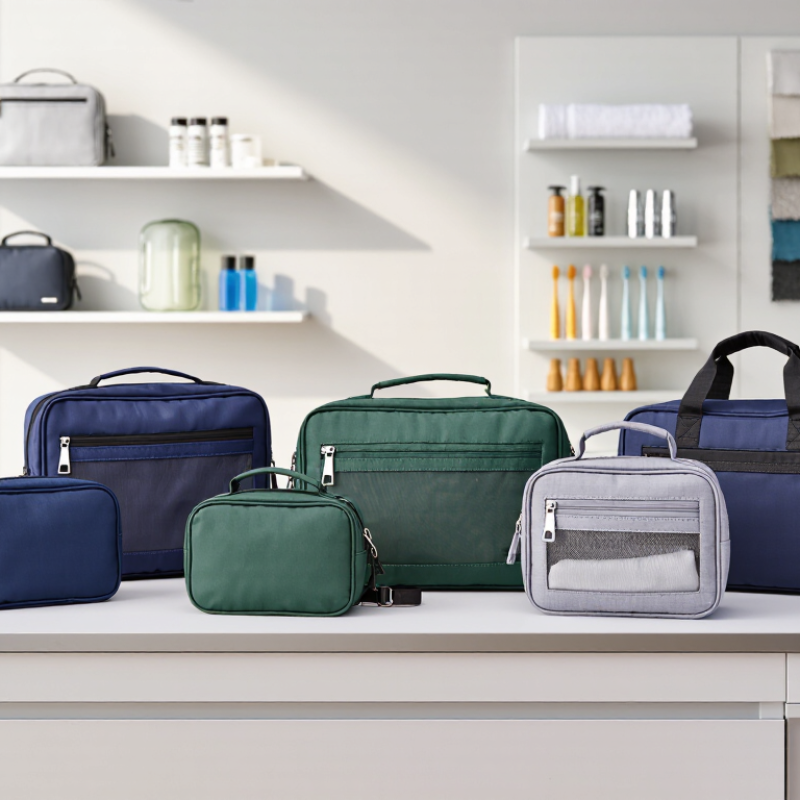
China remains a major sourcing base for travel accessories, including the widely searched “Toiltry Bag” category. Buyers often compare factories in Guangdong, Zhejiang, and Fujian for materials, customization, and production capacity. The decision is not only about price. A bathroom pouch must survive repeated opening, damp countertops, packed luggage, and frequent cleaning.
Grand View Research estimates that the global luggage market reached approximately USD 36.5 billion in 2023. Its forecast also indicates continued growth through 2030, supported by tourism, business travel, and online retail. This broader market acts as a useful demand indicator for toiletry organizers. Mordor Intelligence similarly identifies lightweight construction, practical compartments, and durable materials as important travel-bag purchasing trends. These findings help explain why Chinese suppliers increasingly offer recycled polyester, waterproof linings, mesh pockets, and private-label packaging.
However, supplier claims require careful verification. A polished product catalog proves little by itself. Experienced buyers should request factory photographs, material specifications, sample measurements, zipper testing records, and recent quality-control documents. UN Comtrade trade data can help compare China’s export strength, but it does not confirm an individual supplier’s reliability. That limitation matters.
The strongest manufacturers usually communicate clearly about minimum order quantities, sampling fees, lead times, carton dimensions, and inspection procedures. They can also explain whether a coating is genuinely water-resistant or merely visually glossy. No supplier list is perfect. Public data is incomplete, and factory performance can change. This guide therefore focuses on evidence, practical sourcing checks, and realistic comparisons for global buyers seeking dependable China toiletry bag suppliers.
Chinese toiletry bag suppliers serve a wide range of travel and personal-care needs. Demand remains practical, not cosmetic. UN Tourism’s World Tourism Barometer reported about 1.4 billion international tourist arrivals in 2024, nearly returning to 2019 levels.
Hanging toiletry bags suit business travelers and families. Their hook, mesh pockets, and upright structure keep bottles visible beside a hotel sink.
Flat zipper pouches take less luggage space and work well for short trips.
Clear PVC or TPU bags help users identify liquids quickly, while fabric versions offer a softer, more premium feel.
Hard-shell cases protect small containers from compression.
Waterproof cosmetic bags are useful near pools, gyms, and shared bathrooms.
Chinese factories also produce recycled polyester, cotton canvas, and molded EVA styles. Textile Exchange’s Materials Market Report 2024 stated that recycled polyester represented roughly 14% of polyester production in 2023. Buyers should still request material certificates and production samples. Claims can sound better than the finished product. A recycled fabric may feel thin.
Custom options often include compartment layouts, lining colors, logo methods, zipper pulls, and packaging. In my sourcing experience, zipper quality deserves more attention than decoration. A smooth sample can fail after repeated overpacking. Suppliers should provide stitching checks, water-resistance results, and carton-drop records. These details improve reliability, although no sample can perfectly predict long-term use.
China Top Toiletry Bag Suppliers for Global Buyers
Key Factors for Evaluating Toiletry Bag Manufacturers in China
A reliable toiletry bag manufacturer should show more than attractive product photos. Request factory videos, production records, and recent sample details. Check cutting tables, sewing machines, storage areas, and final inspection stations. These details reveal whether the supplier controls production or only coordinates outside workshops.
Material knowledge matters. Ask about polyester density, waterproof coatings, zipper performance, lining quality, and odor control. A serious manufacturer can explain test methods clearly. Request samples with filled bottles, sharp grooming tools, and repeated opening cycles. Examine seam strength, handle attachment, pocket layout, and edge binding. Small defects often appear after practical use.
Communication also deserves close attention. Confirm sampling time, minimum order quantity, packaging options, and production capacity in writing. Ask how the factory handles color variation and rejected pieces. A supplier that reports problems early may be more dependable than one promising everything. No factory is perfect. I would still question unclear answers, delayed samples, or certificates without traceable testing records. One overlooked detail can affect thousands of bags. Independent inspections can reduce this risk before shipment.
| Evaluation Dimension | What Global Buyers Should Check | Practical Benchmark or Requirement | Recommended Evidence | Priority |
|---|---|---|---|---|
| Product Specialization | Confirm experience with cosmetic bags, travel toiletry bags, hanging organizers, wash bags, and waterproof pouches. | Supplier should provide several comparable product samples using similar fabrics, construction methods, and hardware. | Product catalog, sample set, factory production photos, and previous non-confidential project records. | High |
| Material Selection | Evaluate polyester, nylon, cotton, canvas, PU, TPU, PVC, mesh, lining, foam, and recycled-material options. | Material specifications should state fiber content, fabric weight, coating or lamination type, thickness, and color reference. | Material swatches, technical data sheets, mill documentation, and third-party test reports where required. | High |
| Functional Performance | Check water resistance, seam construction, zipper operation, compartment layout, hanging strength, and ease of cleaning. | Performance requirements should be defined in writing before sampling; acceptance limits depend on the product’s intended use. | Approved sample, inspection checklist, water-repellency results, zipper-cycle records, and load-test results. | High |
| Quality Management | Review how the factory controls incoming materials, in-process production, final inspection, rework, and corrective actions. | A documented quality system and traceable inspection records should be available. ISO 9001 certification can support evaluation but does not replace product inspection. | Quality manual, inspection forms, corrective-action reports, and valid ISO 9001 certificate if claimed. | High |
| Defect Standards | Define acceptable limits for stains, loose threads, skipped stitches, uneven seams, broken zippers, odor, color variation, and wrong labeling. | Many buyers use an AQL-based inspection plan; AQL 2.5 for major defects and AQL 4.0 for minor defects are common reference points, subject to buyer approval. | Signed quality standard, golden sample, defect classification chart, and pre-shipment inspection report. | Critical |
| Compliance and Chemical Safety | Assess restrictions on dyes, coatings, PVC or PU components, plastic parts, metal accessories, and packaging materials. | For EU sales, review applicable REACH requirements. For U.S. products, confirm relevant CPSIA obligations where applicable. OEKO-TEX Standard 100 may support textile chemical-safety verification for certified materials. | Recent laboratory reports, material declarations, restricted-substance test results, and certificate scope verification. | Critical |
| Customization Capability | Check support for dimensions, colors, logo application, printing, embroidery, labels, zipper pulls, lining, inserts, and retail packaging. | Supplier should provide a written sample-development process with artwork approval, color approval, revision control, and final pre-production approval. | Artwork template, sample approval sheet, color standard, packaging mock-up, and pre-production sample. | High |
| Sampling Process | Evaluate communication speed, pattern accuracy, sample workmanship, and control of revisions. | A complete sample package should identify materials, measurements, construction details, accessories, labeling, and approved tolerances. | Development timeline, sample invoice, measurement chart, revised sample history, and approval record. | High |
| Production Capacity | Verify sewing lines, cutting equipment, printing or embroidery capability, staffing, and peak-season planning. | Capacity should be assessed against the buyer’s order quantity and required shipping window rather than judged only by factory size. | Production-line list, capacity statement, manufacturing schedule, and factory audit findings. | Medium |
| Lead-Time Control | Review material procurement, sample approval, bulk production, inspection, and export-document timelines. | Lead time should be stated separately for sampling, material preparation, production, inspection, and shipment. Delays should have a documented escalation process. | Gantt-style production plan, purchase-order milestones, weekly progress reports, and delay-notification procedure. | High |
| Minimum Order Quantity | Compare minimum quantities for standard products, custom colors, custom fabrics, printed packaging, and private-label details. | MOQ may vary by material, color, printing method, hardware, and packaging. Obtain a separate MOQ for every customized component. | Formal quotation showing product MOQ, color MOQ, material MOQ, packaging MOQ, and sample charges. | High |
| Cost Transparency | Review the cost of fabric, lining, accessories, labor, packaging, tooling, testing, sampling, and freight-related services. | Quotation should specify currency, trade term, validity period, packaging basis, included services, and possible surcharges. | Itemized quotation, cost breakdown, proforma invoice, and written change-notification terms. | High |
| Trade Terms and Payment | Confirm whether the supplier can support EXW, FOB, CIF, or other agreed Incoterms and clarify payment milestones. | Use Incoterms® 2020 terminology in contracts. Payment terms should define deposit, balance timing, inspection conditions, bank charges, and refund rules. | Sales contract, proforma invoice, bank details verified through a separate channel, and agreed Incoterms rule. | Critical |
| Packaging and Labeling | Check folding method, polybag or paper packaging, carton dimensions, carton markings, barcode labels, care labels, and country-of-origin requirements. | Packaging specifications should be approved before production and tested for transit protection and accurate shipping marks. | Packaging specification, carton-drop or transit test where needed, label artwork, carton packing list, and pre-shipment photos. | High |
| Traceability | Determine whether raw materials, production lots, operators, inspections, and finished cartons can be traced. | Each production batch should be linked to a purchase order, approved sample, material lot, inspection record, and shipment documentation. | Lot codes, production records, material invoices, inspection logs, and carton-level packing records. | High |
| Social and Environmental Practices | Review working hours, worker safety, fire controls, waste handling, wastewater management, and responsible sourcing policies. | Requirements should match the buyer’s code of conduct and destination-market expectations. A social audit is useful but should be checked for scope, date, and corrective actions. | Social-audit report, environmental permits where applicable, safety records, policy documents, and corrective-action plan. | Medium |
| Communication and Documentation | Assess clarity and consistency in English communication, measurement units, artwork handling, approvals, and change management. | All specifications, revisions, tolerances, and approvals should be recorded in a shared written document rather than relying only on verbal messages. | Specification sheet, meeting records, revision log, approval emails, and document-control procedure. | High |
| Pre-Shipment Inspection | Confirm inspection timing, sample size, defect classification, measurement checks, functionality checks, and packaging verification. | Inspection should be performed against the approved reference sample and written specifications before final shipment release. | Independent inspection report, product photos, measurement records, carton count, and corrective-action evidence. | Critical |
| After-Sales Support | Evaluate how the supplier handles shortages, defects, replacement goods, credits, claims, and future corrective actions. | Contract should define claim deadlines, evidence requirements, response time, remedy options, and responsibility for confirmed defects. | Warranty or claim policy, service-level agreement, complaint records, and signed commercial terms. | High |
Buyer note: Benchmarks shown above are general sourcing references. Final requirements should be confirmed according to the product design, destination market, applicable regulations, order volume, and approved contract specifications.
China’s main toiletry bag clusters serve different purchasing needs. Zhejiang, especially Yiwu and Ningbo, supports flexible small and medium orders. Factories there commonly use polyester, nylon, PVC, mesh, and coated fabrics. Sampling can be fast because material markets and accessory workshops are nearby. Buyers may request clear pockets, elastic loops, waterproof linings, or custom compartments. Cost control is a clear strength.
Guangdong, including Guangzhou, Dongguan, and Shenzhen, often focuses on refined development and export coordination. Manufacturers may provide structured cases, heat-transfer decoration, molded parts, and cleaner finishing. These capabilities suit travel sets, hotel amenities, and premium retail packaging. Many workshops also manage inspections, carton testing, and shipment schedules. However, capability varies sharply between factories. A polished sample proves little.
Jiangsu and Fujian offer additional sewing capacity and practical bag-making experience. Their suppliers can support canvas styles, lightweight organizers, and reinforced travel pouches. During supplier checks, I examine zipper pull strength, seam allowance, lining adhesion, odor, and colorfastness. Production photos are useful, but on-site or third-party inspection is more reliable. I have learned not to equate a low quotation with efficiency. Cheap fabric, weak stitching, or unclear quality standards can create hidden costs. Even experienced buyers sometimes overlook packaging compression during long-distance transport. That mistake deserves more attention.
Global buyers sourcing toiletry bags from China should begin with a clear product brief. Define dimensions, fabric, lining, zipper type, compartments, logo method, and target quantity. Small differences change the price quickly. A recycled polyester shell may need separate material verification.
ITC Trade Map places China among the leading exporters in broad HS 4202 travel-bag categories, where many toiletry bags are classified. Classification can vary by construction, so confirm the HS code with a customs broker. The World Bank’s 2023 Logistics Performance Index ranked China 19th globally, supporting reliable access to ports and freight networks. Still, logistics performance does not guarantee every supplier performs well. Request factory profiles, recent production photos, business licenses, quality records, and video audits. Order samples before discussing large volumes. Test zipper movement, stitching strength, water resistance, and odor. One overlooked detail can create costly returns.
Tips: Compare at least three quotations. Ask whether prices include packaging, inspection, and export documentation. Confirm MOQ, sample fees, production time, payment terms, and Incoterms in writing. Use a third-party inspection before shipment when the order is important. Do not rely only on polished sample rooms. A sample may look excellent, while bulk production shows uneven stitching or color differences. Build a tolerance sheet with measurable standards, such as 3-millimeter size limits and approved color references. The process is not flawless, but careful records make mistakes easier to find and correct.
Global buyers assess Chinese toiletry bag suppliers beyond price and catalog photos. A reliable supplier should show factory experience, process records, and consistent sampling results. Request recent production photos, material specifications, and traceable inspection reports. Check zippers, stitching, lining, handles, and printed surfaces by hand. A loose thread can expose weak workmanship. Small defects matter. A common audit lesson is revealing: approved samples may still hide uneven edge binding in bulk production. That gap deserves honest discussion.
Customization needs written details, not attractive promises. Specify dimensions, compartments, fabric weight, color references, logo placement, packaging, and acceptable tolerances. Ask for a pre-production sample before bulk manufacturing begins. For cosmetics and wet toiletries, inspect lining seams and water resistance carefully. Request colorfastness, odor, material safety, and relevant test documents. Requirements differ by destination market. A supplier familiar with applicable labeling, chemical, packaging, and product rules can reduce avoidable delays. Buyers must still verify current requirements with qualified local advisers.
Build quality control into every stage: incoming materials, cutting, sewing, assembly, and final packing. Use measurable checklists with defect limits and photo evidence. Independent pre-shipment inspection adds useful distance from factory optimism. Keep approved samples and signed specifications for production comparison. Do not rely on verbal corrections. They are easily forgotten. A capable supplier should accept corrective actions and explain root causes. The best partnership is not flawless. It is transparent, documented, and willing to improve.
The chart shows the year each commonly screened quality or market-compliance reference was introduced, enacted, or became applicable. Buyers should verify material composition, testing documents, labeling, restricted substances, and destination-market requirements with each supplier. Applicability varies by product materials and sales market.
References: OEKO-TEX STANDARD 100 introduced in 1992; EU REACH entered into force in 2007; U.S. CPSIA enacted in 2008; ISO 9001:2015 published in 2015; EU General Product Safety Regulation became applicable in 2024.