What Are the Top LED Light Kit Types in 2026?

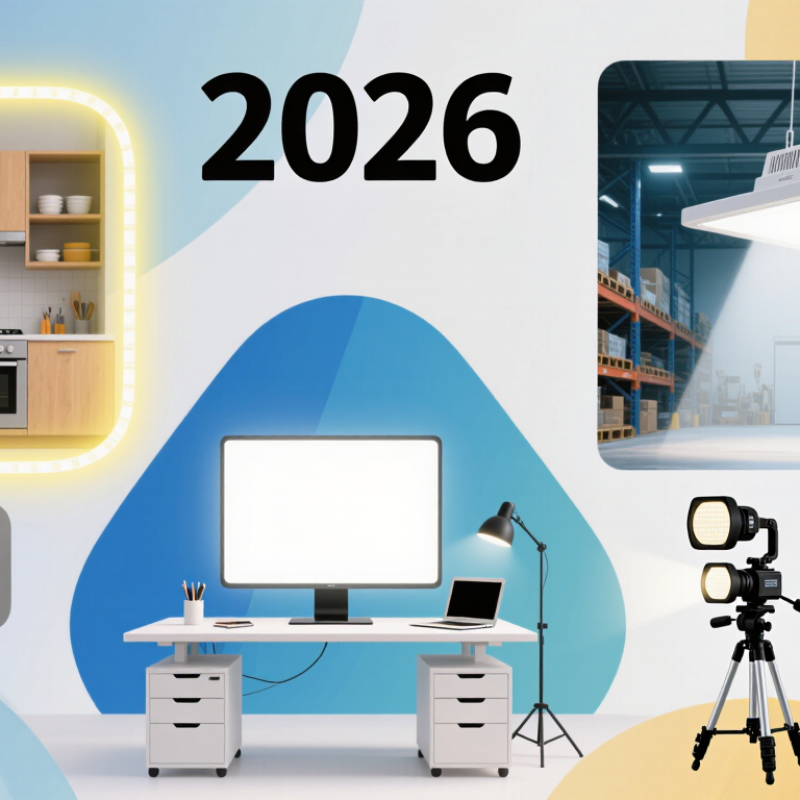
Choosing an LED light kit in 2026 means matching the light to the task, not chasing the brightest box. A flexible strip can trace a kitchen shelf; a flat panel spreads light across a studio desk. High-bay kits suit tall workshops, while portable work-light kits help illuminate a garage corner. Retrofit kits preserve existing fixtures, but compatibility still matters.

The U.S. Department of Energy reports that residential LEDs use at least 75% less energy and can last up to 25 times longer than incandescent lighting. Those figures set a useful baseline, not a guarantee for every product or installation. Check the kit’s lumen output, color temperature, dimmer compatibility, and stated service life. Small print matters.

Energy-sector expert Fatih Birol has called energy efficiency “the first fuel.” That principle helps explain why LED kits attract attention, but efficiency alone does not make a kit suitable. A cool, bright panel may feel harsh above a reading chair. A warm strip may look inviting under a cabinet, yet leave the countertop dim. Not every kit is an upgrade.

This guide compares the leading LED light kit types by application, installation, control options, and practical performance. It also flags where product claims deserve a closer look. One limitation is easy to overlook: published lifetime figures do not tell you how evenly a kit will light your actual room. We’ll keep that distinction in view.
What Are the Top LED Light Kit Types in 2026?

How LED Light Kits Are Classified in 2026

What Are the Top LED Light Kit Types in 2026?

How LED Light Kits Are Classified in 2026

In 2026, LED light kits are commonly classified by their intended use, light source, and control system. Application-based kits include indoor grow lighting, task lighting, accent lighting, and portable work lights. Each serves a different purpose. A desk kit may prioritize even illumination, while a portable kit may need a battery and a sturdy housing. Kits can also be grouped by their light arrangement, such as flexible strips, bars, panels, or multiple adjustable fixtures. These labels help shoppers compare products, but they are not always used consistently across sellers.

Power and control provide another practical way to compare kits. Some run from a wall adapter; others use rechargeable batteries or connect to a low-voltage supply. Controls may include a simple switch, dimming, timers, or app-based adjustments. Check the stated wattage, color temperature, brightness, and compatible power supply. A bright-looking package does not tell you how evenly light will fall across a table or shelf. I would also check the return policy and setup instructions; product descriptions can leave gaps.

Tips: Match the kit to the space before comparing features. Measure the area, note nearby outlets, and consider heat and moisture. For a small shelf, a short dimmable strip may be enough. For larger areas, compare coverage details rather than relying on fixture count alone. Some specifications are easy to overlook. A little uncertainty is normal, so verify key details with the seller or manufacturer documentation.

Core Components and Features of LED Light Kits

LED light kits combine several parts that must work together: LED modules, a power supply, wiring, connectors, and mounting hardware. Some kits also include a controller or dimmer. Each part has a practical role. The power supply must match the lights’ voltage and load, while connectors should fit securely without forcing them.

Check the specifications. Really check them. Look for rated power, color temperature, beam angle, and protection against dust or moisture. A warm-white kit can feel softer in a small room, while a cooler setting may make work surfaces easier to see. Still, published brightness figures do not always reflect real use. A covered fixture or poor airflow can affect performance.

Mounting and heat management matter, too. LEDs produce less heat than many older light sources, but their drivers and surrounding surfaces can still warm up. Leave the recommended clearance, route wires away from sharp edges, and test the kit before fixing panels in place. That last step is easy to skip. I have found that small connector or fit issues often appear only during installation, so a little patience can prevent rework.

The Main Types of LED Light Kits in 2026

LED light kits in 2026 generally fall into a few practical categories: retrofit kits, strip kits, panel kits, high-bay kits, and horticultural kits. Retrofit kits replace parts inside existing fixtures, so they suit renovation work where ceilings or housings should stay in place. Strip kits provide narrow, flexible lighting under cabinets or along shelves. Panel kits spread light evenly across offices and workspaces. High-bay kits direct brighter light into tall warehouses, while horticultural kits are designed to support plant growth indoors.

The right choice depends on the space, mounting height, and desired light distribution—not just the advertised wattage. Check compatibility, dimming requirements, color temperature, and whether the kit includes a driver and mounting hardware. Small details matter. The U.S. Department of Energy reports that LEDs can use up to 90% less energy and last up to 25 times longer than incandescent lighting. Those figures compare LED technology with incandescent bulbs, though; they do not guarantee the same savings for every kit or installation. A poor fit can create glare, uneven coverage, or extra wiring work. That part is easy to overlook.

How LED Kit Types Match Different Applications

What Are the Top LED Light Kit Types in 2026?
How LED Kit Types Match Different Applications

The right LED kit depends on the task, room shape, and mounting conditions. Retrofit bulb kits suit existing sockets in bedrooms and small offices. Linear strip kits tuck beneath cabinets, where a low-profile housing can light a worktop without a bulky fixture. Modular panels spread light across broad ceilings. High-bay kits are better for tall workshops and warehouses, where mounting height and beam distribution matter. A bright kit can still leave dark corners.

The U.S. Department of Energy’s Energy Saver guidance says LEDs use at least 75% less energy and can last up to 25 times longer than incandescent lighting. Those figures compare light sources, not every complete kit or installation. Check measured lumens, color temperature, dimmer compatibility, and heat-management details before choosing. For damp or dusty spaces, verify the kit’s stated environmental rating. A spec sheet is useful, but real ceiling height can change the result.

Tips: Match the kit to the surface and task. Test one fixture in place before ordering a full set. For under-cabinet work, look for even coverage across the counter, not just a high lumen number. And remember: installation layouts are not always as tidy as product diagrams suggest.

What Are the Top LED Light Kit Types in 2026?

Typical light output ranges and the applications each kit type commonly suits.

How to read this: Bars show approximate typical luminous-flux ranges. LED strips are shown per meter; all other ranges are per fixture. Use strip kits for accent and under-cabinet lighting, panels for offices and classrooms, high-bay kits for tall industrial spaces, tube kits for linear indoor fixtures, and floodlight kits for outdoor areas. Actual output varies by product and configuration.

Key Factors for Comparing LED Light Kits

When comparing LED light kits in 2026, match the kit type to the space and task. Slim panels spread light across desks, while adjustable spot kits direct it toward shelves or work surfaces. Strip kits fit narrow cabinets; high-bay fixtures suit tall ceilings. Check measured light output, not just advertised wattage. Lumens indicate brightness, while beam angle affects how evenly light reaches the floor or counter. A narrow beam can create bright spots. A wide beam may feel softer but less focused.

Compare color quality and control options, too. A color temperature around 3000K feels warm; 4000K often looks more neutral. For accurate color checks, review the color rendering index and test samples under the actual fixture when possible. Small differences matter. Confirm that dimmers, sensors, and controls work with the kit, rather than assuming they will. Also inspect heat management, driver access, cable length, and mounting hardware. These details affect installation and maintenance. A compact kit may look efficient on paper, yet struggle in a warm, enclosed space. Compare warranty terms and published performance data, but treat one test result cautiously: room surfaces and mounting height can change the result.

What Are the Top LED Light Kit Types in 2026? – Key Factors for Comparing LED Light Kits
LED Kit Type Typical Applications Typical Light Output Typical Efficacy Common Color Options Dimming and Control Key Comparison Factors Best Fit
LED Strip Light Kits Under-cabinet lighting, shelves, coves, accent lighting, and display cases About 300–1,500 lumens per meter, depending on LED density and power About 70–130 lumens per watt Warm to cool white; some kits offer tunable white or color-changing output Often dimmable with a compatible controller; control may be wired, remote, or app-based Voltage, watts per meter, brightness, cut points, adhesive quality, driver capacity, and connector compatibility Flexible, indirect, or task lighting in compact spaces
Recessed Downlight Kits Living rooms, kitchens, hallways, offices, and other general indoor spaces About 500–1,500 lumens per fixture About 70–120 lumens per watt Commonly warm white, neutral white, or cool white; selectable-CCT models are available Many models support dimming with a compatible dimmer; check for flicker-free operation Cutout size, ceiling clearance, insulation-contact rating, beam angle, glare control, and dimmer compatibility Clean, low-profile general lighting in ceilings
LED Panel Kits Offices, classrooms, clinics, and suspended or grid ceilings About 2,000–5,000 lumens per panel About 80–130 lumens per watt Usually neutral or cool white; some versions offer selectable or tunable color temperature May use standard dimming, 0–10 V, or other controls, depending on the driver Panel dimensions, ceiling mounting method, glare rating, uniformity, driver type, and emergency options Broad, even illumination across larger indoor areas
LED Track Light Kits Retail displays, galleries, kitchens, and adjustable accent lighting About 500–2,000 lumens per head About 70–120 lumens per watt Warm, neutral, and cool white options are common Dimming depends on the track system, fixture, and compatible control gear Track system compatibility, beam angle, aiming range, color rendering, and replaceable-head options Directional lighting where fixtures need to be repositioned
LED High-Bay Kits Warehouses, workshops, gyms, and other high-ceiling spaces About 10,000–30,000 lumens per fixture About 100–170 lumens per watt Typically neutral or cool white Some models support 0–10 V dimming, occupancy sensors, or daylight controls Mounting height, beam distribution, lumen output, thermal management, ingress protection, and controls High-ceiling areas requiring strong, wide-area illumination
LED Grow Light Kits Indoor plant growing, propagation, and small- to medium-scale horticulture Best compared by photosynthetic photon flux (PPF), often roughly 100–800 µmol/s across different kit sizes Compare photosynthetic photon efficacy, commonly stated in µmol/J, rather than lumens per watt Usually a broad-spectrum white output, sometimes supplemented with additional red wavelengths May include adjustable output, timers, or separate channel controls PPF, µmol/J, coverage area, hanging height, spectrum, heat management, and crop requirements Plants that need measured, purpose-designed growing light

Typical ranges are approximate market examples, not guaranteed specifications. Actual output, efficacy, color options, and controls vary by fixture and configuration. Compare products under the same test conditions, and verify electrical, mounting, and dimmer compatibility before installation.

Update: We are here, we are shipping = bring extra natural light into your home during these difficult times.
Go to Top