Choosing a sunshine light manufacturer in China requires more than comparing catalog photos or headline prices. Buyers should examine product design, component quality, testing records, customization options, and after-sales support. A bright sample is not enough. The details matter.
Thomas Edison, the lighting pioneer, is often quoted as saying, “I’d put my money on the sun and solar energy. What a source of power!” The remark captures solar energy’s promise, but it does not tell buyers which supplier can deliver dependable products. That takes closer inspection. For outdoor sunshine light systems, ask about panel output, battery capacity, expected runtime, weather resistance, and performance in low-sun conditions. Request test reports and clear warranty terms. Then compare answers, not just claims.
This guide introduces notable Chinese manufacturers and explains what may distinguish their products, experience, and service. It also considers how suppliers handle project requirements, quality control, and communication. A polished website is only a starting point. Some specifications can look impressive on paper yet leave practical questions unanswered. That is worth acknowledging. Use the comparison as a shortlist, then verify each company’s capabilities directly before making a purchasing decision.
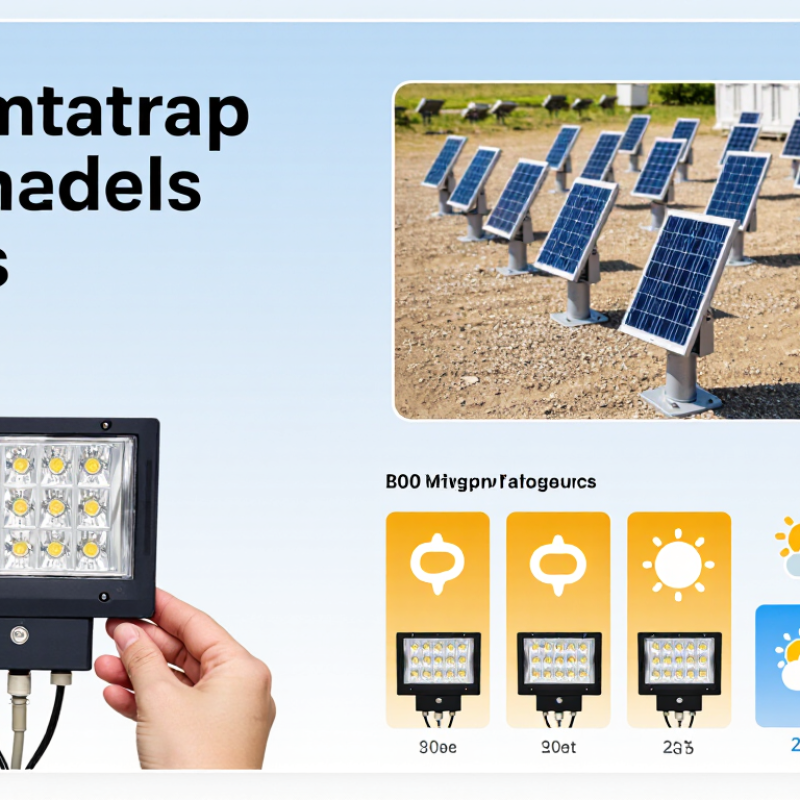
China’s sunshine-light manufacturing sector is defined by products that turn daylight into practical illumination. Solar street lights are a familiar example, combining photovoltaic panels, rechargeable batteries, LED modules, and control units. Their performance depends on the balance between these parts, not on panel size alone. A bright housing can look convincing in a showroom. Night after night is the real test.
Garden lights and solar floodlights serve different needs. Pathway models favor modest output and compact panels, while floodlights need broader beams and dependable energy storage. Portable lanterns and small off-grid lighting kits add flexibility for sheds, campsites, and emergency use. Details matter: check stated runtime, battery capacity, charging conditions, and weather-resistance ratings. A rating is useful, but installation quality still matters.
Manufacturers also compete through component choices and system design. Monocrystalline panels, lithium-based batteries, motion sensors, and dusk-to-dawn controls are common features, though they do not guarantee better results by themselves. Ask how output is measured and whether operating time reflects cloudy conditions. Small print matters. I would be cautious about impressive lumen claims without test conditions; real outdoor performance can be less tidy than a product sheet suggests.
China’s leading solar street-light manufacturers are often the ones that manage the full system, not just the lamp. They coordinate panels, batteries, controllers, and optical design. On a real road, those parts must work together through cloudy weeks, heat, and dust. Ask how a supplier tests battery capacity and nighttime runtime. A bright product photo proves little.
For solar garden lights, look for practical options: warm or neutral color temperatures, adjustable mounting, and sealed housings. Small path lights may need less output, but they still need reliable charging and drainage. Check whether the maker can explain expected runtime under low sunlight. The answer should be specific, not just “long-lasting.” That matters.
Flood lights require a different skill set. Buyers should compare beam angle, glare control, thermal management, and measured output—not wattage alone. Some Chinese factories offer custom optics and enclosure designs, which can help with yards, warehouses, or perimeter lighting. Yet customization may add delays, and sample performance can differ from bulk production. Request test reports, production tolerances, and clear warranty terms. No supplier is best at every category; a careful comparison often reveals gaps that brochures leave out.
Representative rated luminous-flux ranges commonly found in product specifications. These vary by model and are not a ranking of manufacturers or market share.
Street and flood lights typically serve higher-output applications, while garden lights are generally designed for lower-level accent and pathway lighting. Compare verified test data and warranty terms when evaluating suppliers.
When comparing sunshine lights, check fixture efficacy, not just the LED chip figure. Efficacy means delivered lumens divided by input watts, measured at the complete luminaire. The U.S. Department of Energy’s 2022 Solid-State Lighting R&D Opportunities report places leading white LED package efficacy near 160 lm/W around 2019. That is a package-level benchmark, not a finished-light guarantee. Drivers, optics, and heat reduce output. Ask for an LM-79 test report showing lumens, watts, and efficacy for the actual model. A high number can still mislead.
For color quality, treat CRI ≥80 as a baseline, then request the full test data. The CIE’s color-rendering method evaluates how a source reveals sample colors; ordinary CRI can hide weak reds. Check R9 or an IES TM-30 report when accurate skin, produce, or painted surfaces matter. Small detail, big difference. Compare color temperature in kelvins under the same room use: 2700–3000 K appears warm, 3500–4000 K more neutral, and 5000 K or higher cooler. These ranges describe appearance, not quality. Ask suppliers for measured CCT and color consistency across units. A catalog photo cannot prove either. In practice, I would test a sample beside the intended surface; even careful specs leave some room for surprise.
When comparing sunshine-light manufacturers in China, don’t treat IP65 and IP66 as interchangeable labels. IP65 indicates dust-tight protection and resistance to water jets. IP66 indicates protection against more powerful water jets. Neither rating means the luminaire can be submerged. Simple, but often missed.
Ask for an IEC 60598 test report covering the exact model, not just a similar product family. IEC 60598-1 sets general safety requirements for luminaires, while applicable Part 2 sections address specific types. Check the report number, laboratory, tested configuration, voltage, and date. Then compare the housing, seals, cable glands, lens, and battery enclosure with the supplied sample. A changed gasket can matter. So can an unsealed service hatch.
Good paperwork helps, but it is not the whole answer. Request photos of product markings and installation instructions, and confirm the IP rating applies after assembly. For outdoor solar lights, ask how connectors and battery access are protected during maintenance. Don’t assume an IP66 claim proves every component has that rating. I would still ask how production checks are performed; a test report cannot guarantee every unit is identical. That caveat is worth discussing.
When assessing sunshine light manufacturers in China, treat export, warranty, and certification records as evidence to cross-check, not marketing claims. Ask for redacted export documents showing product descriptions, shipment dates, and destination markets. Compare these details with the factory’s stated production history. A shipment record alone does not prove consistent quality. It does show whether similar products have reached real buyers.
Check that certificates name the actual manufacturer and cover the specific light, driver, and battery configuration you plan to purchase. Confirm the issuing body, test standard, report number, and expiry status directly with the issuer where possible. Details matter. A certificate for a similar model may not apply to yours. Request a written warranty that states coverage length, excluded parts, replacement procedures, and who pays freight. Ask how claims are handled after installation, not just before shipment. Vague answers deserve follow-up. I would also compare warranty wording with sample inspection results and batch records; paperwork can look tidy while field performance remains uneven. No single document settles the question. Gaps between records are worth discussing before placing an order.
| Verification Dimension | Evidence to Request | How to Check It | What the Evidence Can Show | Important Limitation |
|---|---|---|---|---|
| Export activity | Recent, redacted bills of lading, customs declarations, or shipment records that identify the legal exporting entity, product description, destination, and shipment date. | Compare the entity name and address with the supplier’s business registration documents. Where available, cross-check shipment patterns using customs or trade-data services such as UN Comtrade or commercial shipment databases. | Consistent records may support a claim that the entity has export experience for relevant lighting products. | Public trade statistics are generally aggregated and may not identify individual exporters. Commercial databases can be incomplete; shipment records alone do not prove product quality or that the factory made the goods. |
| Legal manufacturer identity | Chinese business licence, registered legal name, unified social credit code, registered address, and the name of the entity issuing the quotation and sales contract. | Check the registration details through China’s official National Enterprise Credit Information Publicity System. Confirm that the contracting, invoicing, and claimed manufacturing entities are clearly explained if they differ. | Helps establish whether the supplier is a registered entity and clarifies which entity is responsible for the transaction. | Registration does not establish factory ownership, manufacturing capability, export history, or product compliance. |
| Warranty terms | A dated written warranty stating coverage period, start date, covered components, exclusions, remedy, claim procedure, and who pays shipping or replacement costs. | Compare the warranty with the sales contract and product specification. Ask the supplier to define terms such as battery capacity retention, LED output, and allowable failure rate in measurable terms. | Shows the supplier’s documented after-sales commitment and the process for handling covered defects. | Warranty periods and remedies are contractual terms; a stated duration does not itself prove product reliability or that claims will be honored. |
| Quality-management certification | A current ISO 9001 certificate showing the certificate holder, site address, scope, issue date, expiry date, and certification body. | Verify the certificate with the issuing certification body and check the body’s accreditation status through a recognized accreditation source, such as IAF CertSearch, where the record is available. | Can indicate that a quality-management system has been certified within the stated scope and at the stated site. | ISO 9001 is a management-system certification, not a product safety approval or a guarantee that every shipment meets specifications. |
| Product safety and regulatory claims | Test reports or certificates matching the exact product model, electrical configuration, production site, and intended destination market. | Check the report number, issuing laboratory, standard edition, model coverage, and report authenticity directly with the issuer. For EU notified-body information, consult the European Commission’s NANDO database where applicable. | Relevant, verifiable documents can support specific safety or conformity claims for the tested or assessed product. | Requirements depend on product design and sales market. A test report, supplier declaration, and third-party certificate are different documents; one should not be presented as another. |
| Photometric and performance data | Test reports for luminous flux, power, efficacy, color characteristics, and, for solar luminaires, battery and operating-time performance under stated conditions. | Confirm the tested model matches the quotation and request the test method, laboratory details, test date, sample configuration, and environmental conditions. | Provides measurable performance results for the tested sample under the specified test conditions. | Results may not represent every production unit. Solar-light runtime depends on factors such as battery condition, charge level, temperature, operating profile, and available sunlight. |
| Factory capability | Current facility address, production-line overview, process records, quality-control checkpoints, and permission for an independent factory audit. | Arrange a live video inspection or independent on-site audit. Match the audited location to the registered entity and the site named on relevant certificates or reports. | Can help distinguish a manufacturer from a trading intermediary and assess whether the stated production processes are present. | Photographs and video calls are not conclusive proof of ownership or routine production. An audit is a snapshot and should be scoped to the products and processes being evaluated. |
| Document consistency | Business licence, quotation, contract, invoice, warranty, test report, and export documents for the same transaction or product range. | Compare legal entity names, addresses, product models, dates, and document numbers. Request written clarification for any difference before placing an order. | Consistent records reduce uncertainty about which entity supplies the product and which evidence applies to it. | Different parties may legitimately act as manufacturer, exporter, seller, or certificate holder; the roles should be disclosed and documented. |