
Top 10 Wall Backsplash Ideas for Every Kitchen?
A Wall Back Splash can change a kitchen’s mood before the cabinets or appliances do. It catches light, frames the range, and protects the wall from splashes near the sink. Yet the right choice is not always the most dramatic one.
Houzz’s 2024 U.S. Kitchen Trends Study offers a useful industry reference: it tracks backsplash decisions alongside other major renovation choices. The report is a reminder that homeowners weigh appearance against practical needs. For a broader design principle, interior designer Nate Berkus has said, “Your home should tell the story of who you are, and be a collection of what you love.” Applied here, that can mean choosing a handmade-look tile, a quiet slab, or a simple white surface that suits the room—not just a trend photo.
Small details matter. Grout color can sharpen a grid or soften it; a glossy tile may brighten a dim corner, while textured stone asks for more care. A bold pattern can look striking online, then feel busy beside patterned countertops. That happens. This guide explores ten wall backsplash ideas for different kitchens, budgets, and routines, with attention to materials, upkeep, and visual scale. No single option suits every home. The best one should look good on an ordinary Tuesday, too.
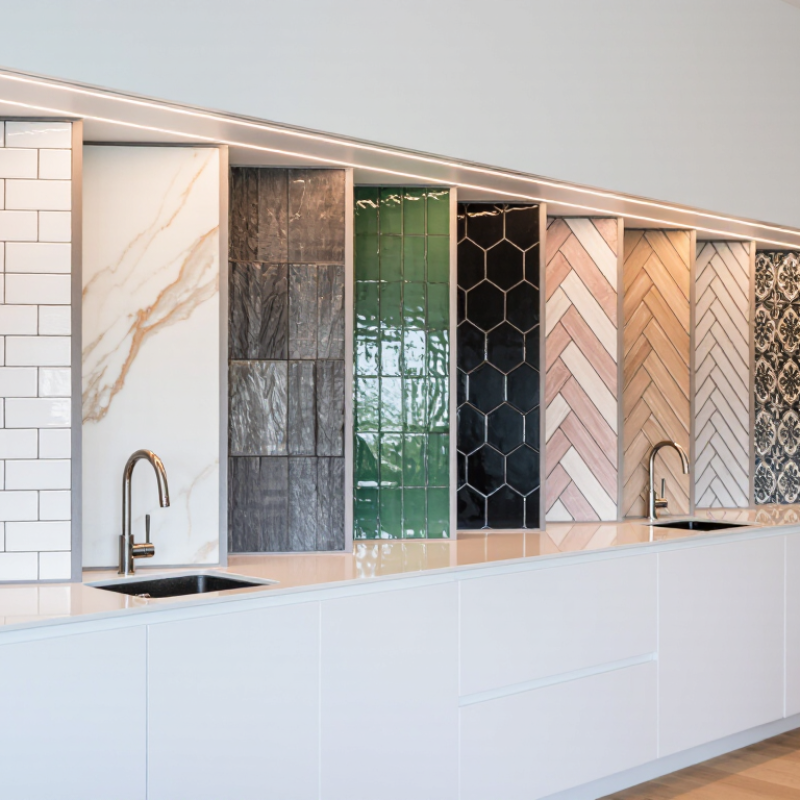
Understanding the Purpose and Placement of a Kitchen Backsplash
A kitchen backsplash is a working surface, not just a strip of decoration. It protects the wall behind sinks and cooktops from splashes, grease, and repeated wiping. Place it where water or cooking residue regularly lands, then check how far those zones extend. A faucet that throws water onto the side wall may need more coverage than a centered sink suggests. Near a range, choose a surface that tolerates heat and cleans without delicate scrubbing. Keep water contained. Grout lines can still stain, and no backsplash fixes a leaking joint.
The U.S. Environmental Protection Agency’s guide, A Brief Guide to Mold, Moisture and Your Home, recommends keeping indoor humidity below 60%, ideally between 30% and 50%. That is broader moisture guidance, not a backsplash performance rating. Still, it highlights why sound sealing and prompt drying matter, especially around sinks. Extend tile to the cabinets for a crisp boundary, or higher behind a range where cooking splatter is concentrated. Before installation, mark the likely splash area with painter’s tape and observe it during ordinary cooking. It is a rough test, but useful. I would not assume a full-height wall is always better: extra coverage adds cleaning surface and cost, while poor edge detailing can leave moisture a place to enter.
Top 10 Wall Backsplash Ideas for Every Kitchen — Understanding the Purpose and Placement of a Kitchen Backsplash
| # | Backsplash Idea | Typical Material | Best Placement | Practical Benefits | Care Notes |
|---|---|---|---|---|---|
| 1 | Classic subway tile | Glazed ceramic or porcelain | Along countertops and behind the range | A versatile tile format with a smooth surface that is generally easy to wipe clean. | Clean tile regularly; grout may need periodic cleaning or sealing, depending on its type. |
| 2 | Mosaic tile | Glass, ceramic, porcelain, or stone pieces | A focal area, such as behind a cooktop or sink | Small pieces make it easier to create patterns, borders, or color accents. | More grout lines can require extra attention during cleaning. |
| 3 | Large-format porcelain | Porcelain tile | Long counter runs or a full-height wall section | Fewer joints can create a more continuous look and reduce the amount of grout to maintain. | Plan cuts and outlets carefully; large tiles may require professional installation. |
| 4 | Natural stone tile | Marble, travertine, slate, or granite | Areas where a natural variation in color and texture is desired | Each piece has its own natural pattern and surface character. | Many stone surfaces are porous; use a suitable sealer and follow care guidance for the specific stone. |
| 5 | Full-height countertop material | A matching stone or engineered-surface slab | From the countertop to cabinets or another defined wall edge | Creates a coordinated surface with fewer seams than many small-tile layouts. | Care depends on the material; confirm heat and cleaning requirements before installation. |
| 6 | Stainless-steel panel | Stainless steel | Behind a range or in a contemporary cooking area | A nonporous, smooth surface that is commonly used in kitchens and has no grout joints. | Wipe with a suitable cleaner and a soft cloth; the surface can show fingerprints or scratches. |
| 7 | Tempered-glass panel | Tempered glass | A smooth, uninterrupted section behind a counter or cooktop | Its smooth surface is easy to wipe and can visually reflect light. | Use glass suited to the intended location; confirm appliance clearances and installation requirements. |
| 8 | Painted backsplash wall | Washable, moisture-resistant paint over a properly prepared wall | Low-splash areas, such as a dry prep counter away from direct heat | A simple way to add color without tile joints or a complex pattern. | Paint is less protective than many hard-surface options; clean gently and touch up when needed. |
| 9 | Brick or brick-look tile | Brick veneer or ceramic/porcelain tile with a brick appearance | A feature wall or a section with a textured, rustic look | Adds visible texture and works well as a distinctive design feature. | Real brick is porous and textured; sealing and careful cleaning may be needed, especially near cooking areas. |
| 10 | Patterned cement tile | Pigmented cement tile | A defined accent area or a smaller backsplash feature | Provides decorative patterns and color that can make a wall a focal point. | Often requires sealing; follow the tile maker’s care instructions and clean spills promptly. |
Purpose and placement: A backsplash protects the wall from everyday splashes, grease, and food residue, especially around sinks and cooking surfaces. Extend it across the counter wall where practical, and check local requirements, appliance instructions, material guidance, and clearances before installing a backsplash near a range.