Why Choose a Car Perfume Diffuser for Your Vehicle?

A clean, comfortable cabin can make an ordinary drive feel calmer. A Car Perfume Diffuser offers a simple way to add fragrance without relying on a dangling paper freshener. Depending on its design, it may use a vent clip, a refillable reservoir, or a compact electric unit. The right choice depends on your vehicle, preferred scent strength, and willingness to maintain it. Small details matter.

A diffuser can help soften persistent everyday odors, such as damp coats or takeout packaging, but it does not remove their source. Ventilation and regular cleaning still matter. Fragrance preferences are personal, too. A scent that feels fresh to one passenger may become distracting to another, especially in a small cabin. Start with a light setting, and check how it feels during a short drive before increasing the output. That practical test is more useful than choosing by packaging alone.

This guide explores how car perfume diffusers work, what features to compare, and how to use one thoughtfully. We will consider refill options, placement, scent intensity, and basic care, including checking the manufacturer’s instructions for your specific model. A diffuser should stay secure and should not obstruct the driver’s view or controls. It is not a cure-all. Even a well-designed device can feel like the wrong choice if the fragrance is too strong or the refills are inconvenient. Choosing carefully makes the cabin more pleasant without promising more than a diffuser can deliver.
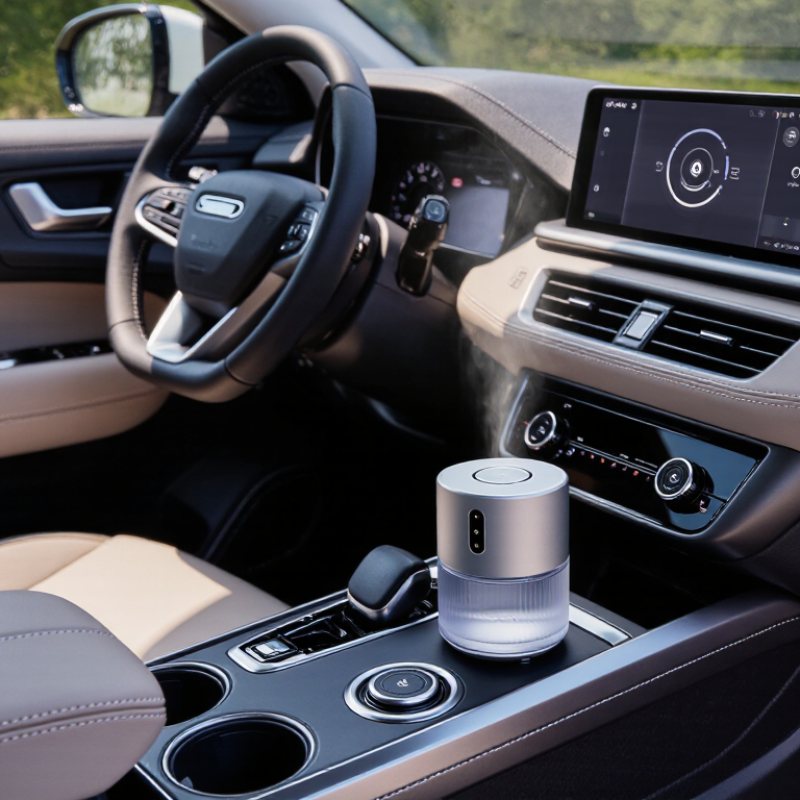
Why Choose a Car Perfume Diffuser for Your Vehicle?

What Is a Car Perfume Diffuser, and How Do Its Main Types Work?

A car perfume diffuser is a device that releases fragrance into a vehicle’s cabin. Unlike a hanging freshener, it may let drivers adjust scent strength or replace the fragrance material. The main types work in different ways, so the label and care instructions matter.

Vent-clip diffusers use moving air to carry scent from a scented pad or cartridge. They need no power, but the fragrance can fade faster when the fan runs often. Liquid diffusers draw fragrance through a wick or porous insert, gradually exposing it to cabin air. Keep them upright; a spill can damage nearby surfaces. Small detail: airflow changes everything.

Powered models may use gentle heat or a small fan to disperse fragrance. Some water-based ultrasonic models create a fine mist, though they need refilling and cleaning. Performance varies with cabin temperature, ventilation, and the fragrance formula. A strong scent in a parked car may feel overwhelming after the cabin heats up. Placement deserves thought: keep the device clear of controls, vents needed for visibility, and the driver’s line of sight. It is easy to assume more fragrance means better freshness; often, a subtle scent is more comfortable.

Why Choose a Car Perfume Diffuser for Your Vehicle? - What Is a Car Perfume Diffuser, and How Do Its Main Types Work?

Type How It Works Power Source Typical Scent Control Practical Advantages Things to Consider
Vent-clip diffuser A fragrance pad, cartridge, or porous material releases scent as air passes over it from the vehicle’s ventilation system. Usually passive; airflow comes from the fan. Often adjusted by changing the vent airflow or opening and closing the diffuser’s air gate, if fitted. Compact, easy to install, and uses the car’s existing airflow. Scent output varies with fan use and airflow; check that the clip fits the vent without obstructing controls.
Hanging or porous-material diffuser Fragrance evaporates gradually from an absorbent surface, such as paper, wood, or another porous material. Passive; no electricity required. Generally limited; the release rate depends on the material, fragrance, temperature, and surrounding airflow. Simple, lightweight, and does not need a power connection. Heat can increase evaporation. Hang securely and keep it away from the driver’s view and airbag areas.
Heated diffuser An electrical heating element warms a fragrance pad or reservoir, encouraging the fragrance to evaporate. Typically powered through a vehicle accessory socket or USB connection. May offer settings or an on/off control; adjustment options vary by design. Can provide fragrance without relying on air vents. Requires power and should be used as directed. Avoid placing it where heat or liquid could damage vehicle surfaces.
Ultrasonic diffuser A vibrating ultrasonic element creates a fine mist from water, usually with fragrance or essential oil added if the unit allows it. Usually USB-powered or rechargeable. Some units provide intermittent operation or other output settings. Can disperse fragrance without a heating element; some models include a timer. Needs water and regular cleaning. Use only liquids approved for the device and secure it to prevent spills.
Nebulizing diffuser A small pump or air stream breaks fragrance oil into fine droplets, typically without adding water. Usually powered by a rechargeable battery or USB connection. Some designs offer timed cycles or adjustable output. Does not require a water reservoir and may allow more direct control of fragrance release. Can use fragrance oil relatively quickly at higher settings; follow cleaning and oil-compatibility instructions.

A car perfume diffuser is a device or fragrance holder designed to release scent inside a vehicle. Choose a type based on how you want it powered, how much control you need, and whether you are comfortable refilling or cleaning it. Keep any diffuser securely mounted and clear of the driver’s sightline, controls, and airbag deployment areas.

How Do Cabin Airflow and Recirculation Shape Fragrance Distribution?

Cabin airflow determines whether a car fragrance feels evenly distributed or concentrated near one seat. With fresh air selected, outside air enters through the HVAC system and gradually dilutes the scent. Recirculation reuses cabin air, so fragrance may linger longer, but it can also build up unevenly. A 2008 field study by Ott and colleagues in the Journal of Exposure Science & Environmental Epidemiology measured an average 1.6 air changes per hour in cars with windows closed and ventilation off. The study measured air exchange, not fragrance, but it shows that a parked cabin is not completely sealed. Small changes matter.

Vent direction and fan speed shape where scent travels. A vent-mounted diffuser may send fragrance across the dashboard, while a low fan setting can leave the rear seats with less noticeable scent. Try a brief drive with fresh air, then switch to recirculation and notice how the cabin changes. Results depend on the vehicle, vent layout, and diffuser position. Not perfectly. A scent that seems mild near the driver may feel stronger in the back, especially with recirculation on. Use a small amount, keep airflow unobstructed, and reassess after a few minutes. The ideal setting is personal, and a little trial and error is hard to avoid.

Why Does VDA 278 Test Automotive VOCs at 90°C and FOG at 120°C?

Why Choose a Car Perfume Diffuser for Your Vehicle?

Why Does VDA 278 Test Automotive VOCs at 90°C and FOG at 120°C?

A diffuser can make a vehicle feel more welcoming, but its materials also matter. Fragrance liquid, plastic housings, seals, and absorbent pads may release volatile compounds as they warm. A warm dashboard. That is why automotive testing uses controlled heat rather than relying only on a product’s scent.

VDA 278:2016, the automotive industry’s thermal desorption method, measures VOC emissions after heating a sample to 90°C for 30 minutes. It then evaluates FOG emissions at 120°C for 60 minutes. The released compounds are analyzed using gas chromatography and mass spectrometry. The higher FOG temperature helps reveal less volatile substances that may condense on cooler surfaces, such as windows. These test temperatures are laboratory conditions, not normal cabin temperatures.

For a diffuser, the results can help compare materials and identify components that deserve closer review. They do not, by themselves, predict a person’s exposure inside every vehicle; ventilation, sunlight, dosage, and cabin temperature all affect real-world levels. Nor does VDA 278 provide one universal pass limit for every product. Vehicle-maker specifications may differ. The method is useful, not perfect, and that distinction is easy to miss when choosing a diffuser.

How Do Power Source, Scent Output, and Refill Capacity Affect Use?

Why Choose a Car Perfume Diffuser for Your Vehicle?

How Do Power Source, Scent Output, and Refill Capacity Affect Use?

Power source shapes where and how a diffuser works. A 12-volt plug or USB connection can provide steady operation, but it may occupy a socket or depend on the car being on. Battery-powered models avoid dangling cables and suit short trips. Check the charging method and timer; a device that runs continuously can use fragrance faster than expected. Small detail.

Scent output should match the cabin, not overpower it. A compact car may need only intermittent bursts, while a larger cabin can disperse fragrance less evenly. Grand View Research estimated the global car air freshener market at about $2.46 billion in 2023, reflecting broad demand, not proof that stronger output is better. Adjustable settings help, though a “low” setting is not a precise dose.

Refill capacity affects maintenance. A larger reservoir means fewer top-ups, but it can also make a diffuser bulkier. Compare the stated refill volume with the maker’s estimated daily use, then calculate a rough lifespan: a 5 ml refill at 0.1 ml per day would last about 50 days. Actual use varies with heat, airflow, and settings. The U.S. EPA’s TEAM studies found some organic pollutants in homes at two to five times outdoor levels; those findings are not vehicle-specific, but they support choosing a mild setting and ventilating the cabin.

How Can Drivers Compare Diffuser Safety, Materials, and Maintenance?

A car perfume diffuser should fit securely and stay clear of airbags, pedals, and the driver’s view. Compare how each model releases fragrance: a slow, adjustable output is often easier to live with than a strong burst in a small cabin. Check the instructions for heat limits and suitable fragrance oils, since parked cars can become very hot. A loose unit may tip during a sharp turn. Small details matter. Avoid placing it where a spill could reach screens, trim, or electrical controls, and stop using it if the housing cracks or leaks.

Materials affect both upkeep and durability. Glass can be easy to wipe but may break if dropped; sturdy plastic is lighter, though some finishes can stain or cloud. Check whether seals and absorbent pads can be replaced, and whether the fragrance is compatible with those parts.

The label matters. For maintenance, follow the maker’s cleaning directions, keep the exterior dry, and avoid mixing leftover scents unless the instructions allow it.

A faint scent may be enough. It is easy to overlook how quickly fragrance builds in a closed cabin, so test a low setting during a short drive and adjust gradually. I might still choose a design that is less attractive if it is easier to clean and stays firmly in place.

Update: We are here, we are shipping = bring extra natural light into your home during these difficult times.
Go to Top