How to Choose a Natural Light Lamp for Office?
Choosing a natural light lamp for office use is not just a matter of picking the brightest model. The right fit depends on your desk, daily schedule, room lighting, and the tasks you perform. A lamp that feels pleasant beside a laptop may create glare on a glossy screen. Small details matter.
Lighting researcher Dr. Mariana Figueiro has described light as “the most powerful synchronizer of the circadian system.” That insight helps explain why timing and exposure deserve attention when comparing lamps. It does not mean a desk lamp can replace daylight or guarantee better sleep. A careful choice is more useful than a dramatic promise.
This guide will help you compare brightness, color temperature, adjustability, and glare control. Picture a lamp with a stable base, a movable head, and controls you can reach without leaving your chair. Then consider where its light lands: on your work, not directly in your eyes. Check the product’s specifications, and look for clear information about its light output and settings. Be cautious with vague claims. A polished product page is not proof of performance.
There is no perfect lamp for every office. That part is easy to forget. Your room may still feel dim on cloudy afternoons, or a highly adjustable model may prove fiddly in daily use. Use the coming sections to weigh practical trade-offs and choose a natural light lamp for office work that suits your space and habits.
Understanding Natural Light Lamps and Their Office Uses
Natural light lamp is a broad retail term, not one precise technical standard. In an office, it usually describes a lamp designed to imitate daylight with bright, often cool-toned illumination. Look beyond the label. Check its measured light output, color temperature, color rendering, diffuser, and dimming options. For desk work, comfortable, even lighting matters more than an impressive “sunlight” claim. Good color rendering can help printed pages and objects appear less distorted.
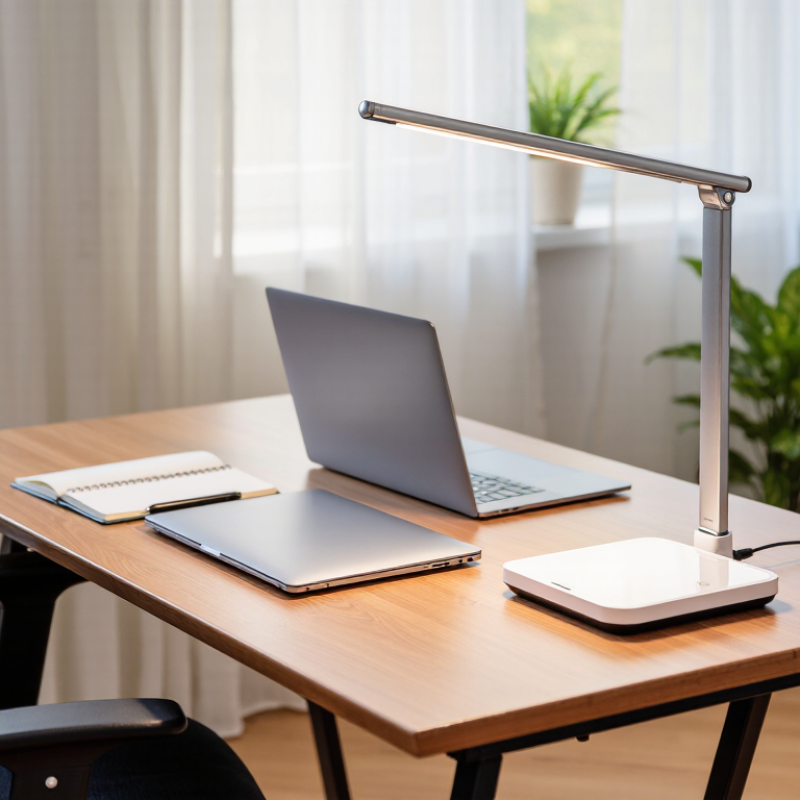
Placement changes how the light feels. Put the lamp beside or slightly behind your monitor to brighten the desk without reflecting on the screen. Keep it adjustable; paperwork may need more light than a video call. Too bright? Not useful. If specifications omit key details, treat that as missing information, not proof of quality. Test the lamp at your actual desk with your usual screen and window; glare may become noticeable only after a while. A daylight-style lamp can help brighten a dim workspace, but it cannot recreate outdoor light or solve every cause of tired eyes. More brightness is not always better.
Assessing Office Lighting Needs and Available Space
Before choosing a natural light lamp, note how daylight moves through your office. A desk beside a bright window may need less added light than a workstation in a shaded corner. Track the room at different times, especially when you work most. Watch the shadows. Check whether shelves, monitors, or tall partitions block light from reaching your desk. Measure the available surface area, too. A wide lamp base can crowd a small desk, while a clamp or wall-mounted fixture may suit a narrow workspace. Leave room for notebooks, a keyboard, and your hands to move comfortably.
Consider what you do at the desk and where the lamp can sit without shining into your eyes or reflecting off a screen. A movable arm helps direct light onto paper, while a broader diffuser can soften harsh contrast around the work area. Match the lamp’s output to the room’s existing light rather than relying on brightness alone. I can overfocus on specifications when comparing lamps; placement often matters just as much. Room measurements cannot show every habit, so test the proposed position with a temporary lamp or a simple desk mock-up. If glare appears during a normal work session, adjust the angle or reconsider the location before settling on a fixture.
How to Choose a Natural Light Lamp for Office? — Assessing Office Lighting Needs and Available Space
Typical maintained illuminance benchmarks vary by task and local standards. Measure light at the work surface, then choose a lamp that helps address the gap. For a compact desk, consider the lamp’s base or clamp footprint; for shared or larger work areas, check that its light reaches the full task area without glare.
Comparing Brightness, Color Temperature, and Light Quality
A natural-light lamp should be judged where you work, not by its packaging. Lumens describe total light output, but lux tells you how much reaches the desk. Check the desk. A reading near 500 lux is a useful starting point for many office tasks, though room surfaces and personal comfort change the result. Use a dimmer if white pages look glaring or screen text feels washed out.
Color temperature shapes the mood of the light. Around 4000 K often looks neutral for daytime desk work, while warmer light can feel gentler later in the day. Cooler is not automatically clearer. Try the lamp beside your monitor and notice whether the light makes the screen seem bluish or creates a sharp contrast with the room. I used to assume a higher setting meant better focus; it mostly meant more squinting.
Light quality matters as much as brightness. Look for even illumination, low visible flicker, and a diffuser that softens harsh edges. A color rendering index of 90 or higher can help when judging printed colors, drawings, or fabric samples, though it does not describe every aspect of light quality. Check for reflections on the screen and dark patches near the keyboard. A lamp can look excellent in a showroom and still feel wrong at your desk.
Checking Lamp Design, Adjustability, and Safety Features
When choosing a natural light lamp, inspect its shade before its color claims. A diffuser should soften the beam, while a shielded bulb helps prevent glare on a monitor. EN 12464-1:2021 specifies 500 lux for office tasks such as reading and data processing. Treat that figure as a useful task-area reference, not a promise that one lamp will light an entire room. Small details matter. Check the lamp’s stated output and place it so the beam reaches the desk without reflecting in the screen.
Adjustability is practical, not decorative. A pivoting arm and swiveling head let you move light onto paper, then away from your eyes during screen work. A dimmer helps when daylight shifts across the desk. Look for clear color-temperature settings; “natural” on a package can mean different things. I’ve found that even a well-reviewed lamp can feel harsh when its head sits too close. That part is easy to overlook.
Check the base for stability, the cord for damage, and the controls for easy reach. Choose a model tested to a recognized luminaire safety standard, such as IEC 60598-1, and follow its installation instructions. If the lamp feels hot, flickers, or has a loose joint, stop using it and check the manual or seek qualified help. Certification labels vary by market, so verify what the mark actually covers.
Matching a Lamp to Your Work Routine and Budget
Choose a lamp around your actual workday, not an idealized routine. If you begin before sunrise, a broad, adjustable lamp may help brighten your desk while you read email or plan tasks. Check the stated brightness and the distance at which it is measured; a high number can be less useful when the lamp sits far away. Keep the light beside your screen, aimed to reduce glare rather than shine into your eyes. Small detail, big difference.
For long computer sessions, prioritize dimming, a stable base, and a shade that directs light without creating a bright spot on the monitor. A warmer setting may feel comfortable late in the day, while a cooler setting can suit focused daytime work. Preferences vary, so try the controls before paying extra for many color modes. If you use a light for a specific health reason, follow its instructions and ask a qualified clinician about suitability.
Set a budget by separating useful features from decorative ones. A modest lamp with reliable controls and easy positioning may serve better than an expensive model with settings you never touch. Check replacement-part availability and the return policy, especially if brightness feels uncomfortable. I would not assume “full spectrum” alone proves better performance; specifications and fit matter more. And your first choice may need adjusting.