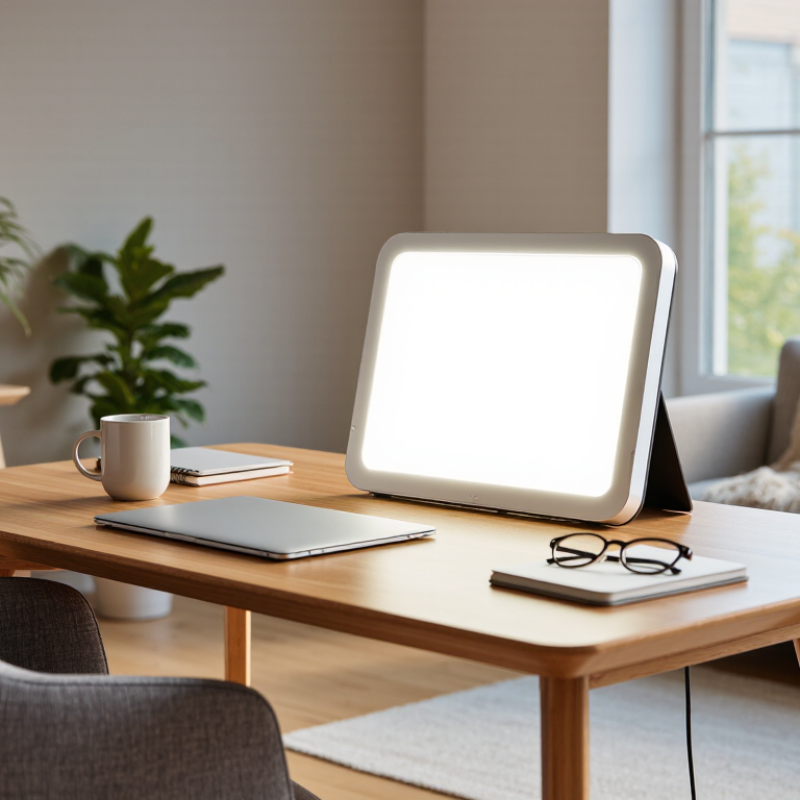
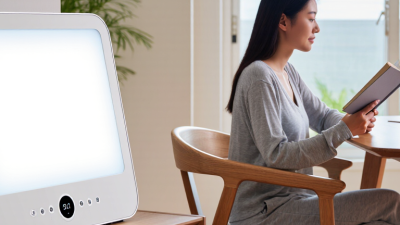
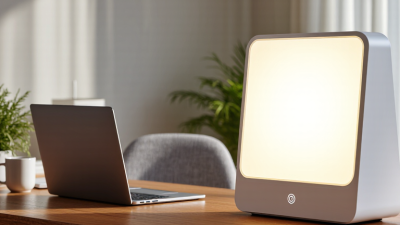
7 Best Therapy Light Lamps for Global Buyers?

Choosing a therapy light lamp can feel simple until brightness, safety, distance, and regional standards enter the picture. Global buyers need more than attractive product photos. They need evidence, practical testing details, and clear instructions.

Dr. Norman E. Rosenthal, a psychiatrist who helped introduce light therapy for seasonal affective disorder, has described light therapy as “the most effective treatment for seasonal affective disorder.” His work reminds shoppers that a lamp is not merely a bright desk accessory. Its performance depends on measured lux, suitable timing, correct positioning, and consistent use.

This guide examines seven therapy light lamp options for different homes, offices, and travel routines. Each selection considers light intensity, UV protection, adjustable settings, timer functions, viewing distance, and user comfort. A lamp rated at 10,000 lux may require a specific distance, often around 30 to 60 centimeters. That detail can change the experience completely.

Power compatibility also matters. A product made for North America may need a different plug or voltage arrangement in Europe, Asia, or Australia. Buyers should check certification information, warranty coverage, and return policies before ordering internationally. Marketing language can be vague. Measurements are better.

No shortlist is flawless. Some lamps look elegant but offer limited adjustment. Others perform well yet feel too large for a crowded bedside table. We may also favor tested specifications over fashionable design, although personal preference still matters. The best therapy light lamp is the one that fits verified guidance, daily habits, and a buyer’s actual environment. Familiarity helps. Careful comparison helps more.

7 Best Therapy Light Lamps for Global Buyers?

What Makes a Therapy Light Lamp Effective? The 10,000-Lux Standard

For global buyers comparing the 7 best therapy light lamps, 10,000 lux is a useful starting point. It describes illuminance, not overall treatment quality. Clinical studies commonly test 10,000 lux for about 20–30 minutes each morning. However, the result depends on distance, eye position, timing, and personal sensitivity.

The lux value should be measured where your eyes receive the light. A lamp rated at 10,000 lux from 30 centimeters may provide far less at 60 centimeters. Research reviews in the Cochrane Library have examined bright-light therapy for seasonal affective symptoms, but they also report limitations in study quality and consistency. That matters. A bright panel is not automatically a clinically effective device.

Look for verified output, stable brightness, visible-light filtering, and clear usage instructions. The American Academy of Sleep Medicine supports timed light exposure for selected circadian rhythm disorders, while photobiological safety guidance from the International Commission on Non-Ionizing Radiation Protection emphasizes controlled exposure and eye safety. Users with eye conditions or photosensitizing medication should seek professional advice. I would also check glare: harsh white light can cause headaches, even when the specification looks impressive. The 10,000-lux standard helps comparison, but it is not a guarantee.

7 Best Therapy Light Lamps for Global Buyers: The 10,000-Lux Standard

Illuminance is measured in lux. A commonly used benchmark for bright-light therapy lamps is 10,000 lux at the recommended treatment distance. For meaningful comparison, buyers should check the lux rating, measurement distance, session duration, UV protection, and adjustable brightness.

Reference comparison: typical values vary by environment, weather, device design, and measurement distance. A 10,000-lux lamp should deliver that intensity at the stated treatment distance, not only at the light source.

How to Compare 7 Lamps by Lux, UV Output, Spectrum, and Coverage

When comparing seven therapy light lamps, check lux at the same distance, not only the advertised maximum. A lamp claiming 10,000 lux may reach that level only at a short range. Numbers can mislead. Record the tested distance, beam angle, and measurement method. A calibrated light meter gives better evidence than a product photograph or vague label.

UV output deserves careful attention. For bright-light use, buyers should look for documented UV filtering and independent test results. “Full spectrum” is not a sufficient technical description. Request a spectral graph showing visible wavelengths, intensity balance, and any sharp peaks. A smoother spectrum may feel more natural, although personal comfort varies. Do not ignore glare. A very bright panel can cause eye strain when its diffuser is uneven.

Coverage separates practical lamps from impressive-looking ones. Compare the illuminated area at 30, 45, and 60 centimeters. A small panel may produce strong lux in the center, while the edges become noticeably dim. Wider coverage supports more natural positioning, but it can reduce intensity. I would test each lamp beside a desk, noting shadowing, heat, noise, and flicker. That approach is imperfect, yet it reveals daily problems specifications often hide. Buyers should also check operating instructions, electrical compatibility, warranty terms, and safety guidance for their region. Personal experience is useful, but it should not replace clinical advice, especially for people with eye conditions or light-sensitive treatment.

Blue-Light Therapy Explained: The 460–480 nm Wavelength Range

Blue-Light Therapy Explained: The 460–480 nm Wavelength Range

For global buyers comparing therapy light lamps, wavelength deserves close attention. Blue-light devices commonly target the 460–480 nm range, where light interacts with skin and photosensitive biological processes. However, a stated wavelength alone does not prove effectiveness. Irradiance, treatment distance, exposure time, and optical consistency also matter. A lamp emitting 470 nm may perform differently from another lamp with the same specification.

Clinical research has explored blue light for selected skin concerns, including acne-related bacteria and seasonal mood support. Results vary between individuals, and home devices are not replacements for professional diagnosis. My practical experience with light equipment is that comfort affects consistency. A harsh glare, noisy fan, or confusing timer can discourage regular use. Small design details matter. Yet, evidence is still developing for many consumer claims.

Tips: Check the peak wavelength and wavelength range, not just “blue light.” Ask whether measurements were independently tested. Use eye protection when the instructions require it, and avoid staring directly into bright LEDs. People using photosensitising medication or managing eye conditions should seek medical advice first. Also check voltage, plug standards, safety certification, and return policies before ordering internationally. Some lamps advertise a broad spectrum, but that can hide weak output at 460–480 nm. I would not treat a colourful product page as proof. That assumption needs questioning.

Safety and Certification: IEC 62471, CE, FDA, and RoHS Criteria

7 Best Therapy Light Lamps for Global Buyers

When comparing therapy light lamps, safety documents deserve more attention than brightness claims. IEC 62471 evaluates photobiological risks, including ultraviolet, visible, and infrared exposure. Ask for the test report, risk group, measuring distance, and operating conditions. A lamp marked “low risk” still needs clear instructions about distance and session time. Small print matters.

CE marking indicates conformity with applicable European Union requirements; it is not a universal quality award. Check the EU Declaration of Conformity and the relevant electrical safety and electromagnetic compatibility standards. FDA status also requires careful reading. Some products may be cleared, registered, or marketed under different classifications, while others may not need a specific clearance for their intended use. The exact claim matters.

RoHS compliance limits certain hazardous substances in electrical equipment. Request a current RoHS declaration, material statement, or supplier test evidence. I would also inspect the power adapter, timer, ventilation openings, labels, and user manual. A polished certificate can hide weak documentation. That happened in my early screening work. I focused too much on logos and not enough on traceable test details. Buyers should compare all seven lamps using the same checklist, because certification scope, model number, and market destination may differ. Safety is never just a badge.

7 Best Therapy Light Lamps for Global Buyers? - Safety and Certification: IEC 62471, CE, FDA, and RoHS Criteria

Rank & Lamp Category Common Intended Use Typical Light Output Key Performance Data to Verify IEC 62471 Safety Criteria CE Compliance Evidence FDA Considerations RoHS Evidence Global Buyer Safety Checklist
1. Bright-Light Therapy Lamp Seasonal affective disorder support, circadian-rhythm management, and daytime alertness. Broad visible white light; many products are designed to deliver approximately 10,000 lux at a specified distance. Measured lux at the user distance, UV leakage, flicker percentage, color temperature, beam uniformity, and timer accuracy. Request an IEC 62471 photobiological safety test report. Prefer a documented Risk Group 0 or Risk Group 1 classification for normal use. Request the EU Declaration of Conformity covering applicable EMC, electrical safety, and RoHS requirements. CE marking alone is not a test report. FDA clearance is not automatically required for general wellness lighting. Check whether the intended claims create a medical-device requirement. Request a current RoHS declaration and supporting material or component evidence; confirm the destination market’s version of RoHS. Confirm no harmful UV emission, stable operation, visible safety labeling, and instructions for users with photosensitivity or eye conditions.
2. Red-Light Photobiomodulation Panel Skin-care support, temporary relief of minor muscle discomfort, and general photobiomodulation applications. Visible red LEDs commonly centered around 620–670 nm; irradiance varies substantially by design. Wavelength tolerance, irradiance in mW/cm² at the treatment distance, dose in J/cm², treatment area, thermal rise, and LED lifetime. Obtain the IEC 62471 report for the complete assembled lamp, including accessible emission limits and viewing distance assumptions. Verify the EU Declaration of Conformity and applicable electrical, EMC, and product-safety standards. Medical claims may require a medical-device conformity route. A general wellness product is not automatically FDA-cleared. For treatment claims, verify the exact U.S. indication and any 510(k) clearance or other applicable pathway. Request a supplier declaration supported by a bill of materials, supplier declarations, or laboratory testing for restricted substances. Check eye protection guidance, maximum session time, surface temperature, electromagnetic compatibility, and independent irradiance testing.
3. Red/Near-Infrared Therapy Panel Deeper-tissue photobiomodulation research, muscle recovery support, and localized wellness use. Red light commonly around 630–670 nm combined with near-infrared light commonly around 810–850 nm. Separate irradiance by wavelength, spectral bandwidth, total dose, pulse frequency if applicable, uniformity, and heat management. The IEC 62471 assessment should cover both visible and infrared emissions and clearly state the applicable exposure limits. Require a valid Declaration of Conformity, technical documentation, EMC testing, and low-voltage or equivalent electrical-safety evidence where applicable. FDA status depends on claims and intended use. Do not treat “FDA registered” or “FDA listed” as equivalent to FDA clearance. Confirm restricted-substance compliance for LEDs, cables, circuit boards, plastics, solder, and power-supply components. Use wavelength-specific eye protection when required, verify skin and surface temperatures, and avoid unsupported disease-treatment claims.
4. Blue-Light Acne Therapy Lamp Acne-related skin treatment using visible blue light; intended use must be clearly defined. Usually a narrow visible-blue band, often near 405– blue;">420 nm; exact wavelength and dose are device-specific. Peak wavelength, bandwidth, irradiance, fluence, treatment duration, skin-contact distance, heat, and eye-protection requirements. Request an IEC 62471 report addressing blue-light retinal hazard and the manufacturer’s stated exposure conditions. For medical claims, verify the applicable EU medical-device conformity route rather than relying only on a generic CE mark. Verify the exact FDA clearance, product code, intended indication, and labeling if acne-treatment claims are made in the United States. Request RoHS documentation for the finished device and confirm whether any component or market-specific exemption is being used. Require clear eye-safety instructions, contraindications, treatment limits, cleaning guidance, and warnings for photosensitizing medicines.
5. Narrowband UVB Phototherapy Lamp Clinically supervised phototherapy for conditions such as psoriasis, vitiligo, or eczema; professional guidance is important. Narrowband UVB is commonly centered near 311–313 nm; UV exposure is intentionally hazardous if misused. UV spectral distribution, calibrated irradiance, dose control, timer accuracy, exposure-area uniformity, interlocks, and lamp aging. IEC 62471 evidence alone does not replace clinical risk controls. Require UV-specific exposure assessment, shielding, labeling, and protective eyewear instructions. Confirm the correct medical-device conformity assessment, risk-management file, technical documentation, and market-specific importer obligations. Check the exact FDA authorization or clearance for the intended indication. A general FDA registration statement is not proof of authorization. Obtain a RoHS declaration while checking whether medical-equipment exemptions apply in the target jurisdiction. Buy only with professional-use instructions, dose control, protective eyewear, emergency shutoff, shielding, and replacement-lamp guidance.
6. Infrared Heat Therapy Lamp Localized warming, temporary muscle relaxation, and heat-based comfort applications. Primarily infrared radiation, often with broad output extending from near-infrared into longer infrared wavelengths. Radiant heat intensity, surface temperature, distance, automatic shutoff, tip-over protection, hot-spot uniformity, and burn-risk controls. Request IEC 62471 assessment for optical radiation and verify that thermal hazards are addressed separately through electrical and product-safety testing. Require a Declaration of Conformity and evidence for electrical safety, EMC, thermal safety, mechanical stability, and applicable national plug requirements. FDA requirements depend on the intended medical claims. Wellness or warming claims should not be presented as FDA-cleared treatment claims. Verify RoHS status for the lamp, wiring, switch, control board, enclosure, and power supply. Prioritize burn prevention, fire resistance, stable mounting, automatic timer shutoff, ventilation, and warnings for reduced heat sensitivity.
7. Multi-Mode Facial Light Mask Cosmetic skin-care routines using red, near-infrared, blue, or combined light modes. Common modes may include red light around 630–660 nm, near-infrared around 810–850 nm, and blue light around 405–420 nm. Wavelength accuracy, irradiance at the skin, dose per mode, eye shielding, fit, battery safety, charging temperature, and session timer. Request IEC 62471 testing for every operating mode, especially blue-light retinal hazard and combined-mode exposure. Verify EU conformity documentation, battery and charger safety, EMC testing, labeling, and whether medical-device rules apply to the claims. For acne or other therapeutic claims, verify the exact FDA authorization. “FDA registered” alone does not demonstrate product clearance. Request finished-product RoHS evidence and check the battery, charging cable, LEDs, flexible circuit, adhesives, and plastics. Confirm a comfortable fit without excessive pressure, built-in eye shielding, automatic shutoff, battery protection, and warnings for photosensitivity.
Buyer’s note: IEC 62471 is a photobiological-safety assessment standard, not a general product approval. CE marking is a manufacturer’s conformity declaration for applicable EU requirements, while FDA clearance or authorization is indication- and device-specific. RoHS compliance concerns restricted substances and should be supported by current technical documentation. Always verify certificates, test reports, intended use, and market-specific requirements for the exact finished product.

Global Buying Guide: Voltage, Plug Types, Warranty, and Shipping Data

Choosing the seven best therapy light lamps for global buyers requires more than checking brightness. Start with voltage. A lamp rated for 100–240V usually suits international homes, but confirm frequency support at 50Hz or 60Hz. A plug adapter changes the shape, not the voltage. Measure twice.

Plug types vary by destination, including Type A, C, G, and I. Ask whether the package includes the correct plug or only a regional version. Check the power label, cable length, timer controls, and light intensity before ordering. I prefer products with clear safety documents and stable stands, because small design flaws become frustrating during daily use.

Warranty terms deserve equal attention. Look for coverage length, excluded damage, repair procedures, and return shipping responsibility. A one-year warranty may sound adequate, yet overseas returns can cost nearly as much as the lamp. Read the fine print.

Shipping data should show dispatch time, carrier, tracking, package dimensions, and estimated customs handling. Delivery estimates are not promises, especially during holidays or port delays. Duties may be collected locally and may not appear at checkout.

Keep screenshots of the listing and invoice. My own buying checklist is useful, but not perfect; sellers sometimes update specifications without obvious notice.

For photosensitivity, eye conditions, or medication concerns, ask a qualified healthcare professional before regular use.

Update: We are here, we are shipping = bring extra natural light into your home during these difficult times.
Go to Top