What Is the Best Natural Daylight Lamp in 2026?
Choosing the best natural daylight lamp in 2026 is not as simple as selecting the brightest model. A convincing lamp must make a desk, reading corner, or makeup mirror feel clearer without creating harsh glare. It should also reproduce colors accurately, remain comfortable for long sessions, and fit naturally into daily routines.
This guide examines practical details that product pages often overlook. We will compare color temperature, brightness, color rendering, flicker performance, beam direction, controls, and energy use. A lamp with a high CRI can make white paper, skin tones, and fabric colors appear more realistic. However, CRI alone does not guarantee comfort. The diffuser, light distribution, and distance from your eyes matter too. Small differences become obvious at 7 a.m., when a cold blue beam hits a tired face.
Real experience matters.
I have found that adjustable brightness is often more useful than maximum output. A lamp may look impressive in a showroom, yet feel unpleasant beside a laptop. We will consider independent testing, manufacturer specifications, warranty terms, and relevant safety certifications. Medical claims require extra caution, especially when a lamp is marketed for seasonal mood changes or sleep-related concerns. A daylight-style lamp is not automatically a medical device.
No single model suits everyone. Your room size, eyesight, work habits, and budget can change the answer. Some recommendations may also deserve reconsideration as newer 2026 models appear. The goal is not to crown a flashy winner, but to identify the natural daylight lamp that performs reliably in real homes.
What Makes a Natural Daylight Lamp Effective in 2026?
An effective natural daylight lamp in 2026 should do more than look bright. It should reproduce daylight comfortably, consistently, and safely. The CIE S 026:2018 standard recommends measuring light by its melanopic effect, not only by ordinary lux. This matters because a cool, bright beam can feel stimulating while still creating glare or eye fatigue. For desk work, EN 12464-1 commonly references 500 lux on the task area. More is not always better.
Glare control is essential. The Illuminating Engineering Society’s Lighting Handbook emphasizes uniform distribution, suitable luminance, and reduced reflections on screens. Look for a diffuser that produces soft light across the desk, rather than a harsh circle under the fixture. A high color-rendering index, ideally above 90, helps skin, paper, and food appear more natural. Flicker also deserves attention. The IEEE 1789 framework links risky modulation patterns with possible visual discomfort, although personal sensitivity varies widely.
Spectrum and controls should work together. The U.S. Department of Energy’s 2023 SSL R&D Plan identifies tunable and controllable lighting as important development areas. A useful lamp can provide warmer light in the evening and cooler daylight during focused work. The International Energy Agency reports that lighting uses roughly 15% of global electricity, so efficient LED operation remains practical, not decorative. My own test would include reading for two hours, checking screen reflections, and measuring desk illuminance. Numbers help. They do not replace comfort.
What Is the Best Natural Daylight Lamp in 2026? - What Makes a Natural Daylight Lamp Effective in 2026?
Comparison based on commonly specified performance characteristics for natural daylight lamps available in 2026. Actual performance varies by model, distance, room conditions, and manufacturer testing.
| Lamp Profile |
Typical Color Temperature |
Color Rendering |
Useful Illuminance |
Flicker Performance |
UV Safety |
Typical Power |
Best Use |
| Premium full-spectrum LED panel |
4,000–6,500 K, adjustable |
CRI 95+; strong red rendering |
500–1,000 lux at desk height |
Low-flicker or flicker-free design preferred |
No intentional UV output |
30–60 W |
Best overall choice for workspaces and studios |
| Large daylight therapy lamp |
5,000–6,500 K |
CRI 80–95 |
10,000 lux at a specified short distance |
Should be verified at the stated operating distance |
UV-free output is recommended |
20–45 W |
High-intensity morning light routines |
| Adjustable desk lamp |
2,700–6,500 K |
CRI 90+ |
300–800 lux at the work surface |
Low-flicker driver recommended |
No UV output under normal operation |
8–18 W |
Reading, studying, and compact desks |
| High-CRI linear light |
4,000–5,000 K |
CRI 90–98 |
500–1,000 lux with suitable mounting |
Typically low flicker with a quality driver |
No intentional UV output |
20–40 W per 1.2 m fixture |
Even illumination across long work surfaces |
| Portable daylight lamp |
5,000–6,500 K |
CRI 80–95 |
200–600 lux at typical use distance |
Performance depends strongly on battery and driver quality |
UV-free output recommended |
5–15 W |
Travel, temporary workstations, and flexible use |
Key selection criteria: Choose a lamp with measured illuminance at the intended distance, CRI of 90 or higher, low temporal light modulation, adjustable brightness, minimal glare, and no intentional ultraviolet emission. For general desk work, approximately 300–500 lux is commonly suitable; higher levels should be used according to the product instructions and personal comfort.
How to Compare Full-Spectrum Light Quality and Color Accuracy
What Is the Best Natural Daylight Lamp in 2026?
The best natural daylight lamp is not simply the brightest one. Compare its full-spectrum light quality through the spectral power distribution, not marketing language. A smooth spectrum usually reveals colors more naturally across a room. Look for a color temperature near 5000K to 6500K for a daylight appearance. Warmer settings may feel comfortable, but they do not resemble midday daylight closely.
Color accuracy needs more than a high CRI number. CRI Ra is useful, yet it can hide weak red performance. Check TM-30 results, especially Rf for fidelity and Rg for color saturation. Values near 100 indicate closer reproduction, though they do not guarantee pleasant light. Test familiar objects, such as skin, a ripe tomato, and navy fabric. Notice muted reds or strange green shadows.
Use a light meter if possible. Measure brightness at your desk, not beside the lamp. Also check flicker data, glare control, and color consistency at different brightness levels. My first comparison relied too heavily on CRI. That was a mistake. Two lamps with similar ratings looked noticeably different on paper and in practice. Independent laboratory reports are more trustworthy than vague claims of “sun-like” illumination. A lamp can still feel artificial. Your room’s wall color, shade design, and viewing angle may change the result.
Which Features Improve Comfort, Energy Efficiency, and Daily Use?
A good natural daylight lamp should make a room feel clear, not harsh. Look for adjustable color temperature, usually from warm evening light to cooler daytime light. A high color rendering index helps fabrics, skin tones, and printed pages appear more natural. Low-flicker performance also matters, especially during long reading or desk sessions. I notice eye comfort depends on placement as much as the lamp itself. A bright bulb aimed directly at the face becomes tiring quickly.
Energy efficiency improves when the lamp uses efficient LEDs, multiple brightness levels, and an automatic timer. Dimming prevents wasted light during cloudy mornings or late afternoon. A memory function can restore your preferred setting without repeated adjustments.
The base should remain stable, while the arm or shade should move smoothly. Small details matter in daily use. A reachable switch is better than a hidden touch panel.
Not every daylight lamp suits every room. A compact model may brighten a desk but leave nearby corners dull. A larger diffuser can spread light more evenly, though it may consume more power. Check independent testing for flicker, color accuracy, and energy use rather than trusting vivid packaging claims. No lamp perfectly replaces a window. I still prefer natural light when available, but a carefully positioned lamp can reduce shadows and make winter work more comfortable. It may take several days to find the right brightness.
How to Choose the Best Daylight Lamp for Different Activities
What Is the Best Natural Daylight Lamp in 2026?
The best daylight lamp depends on the activity, not the highest advertised brightness. For reading, drawing, or sewing, choose adjustable output near 500 lux at the work surface. EN 12464-1 lists 500 lux for many reading and writing tasks. A 4000K to 5000K setting usually feels clear without looking overly blue. For screen work, reduce glare and use moderate brightness. The U.S. Department of Energy reports that LED lighting uses at least 75% less energy than incandescent lighting. Energy efficiency matters, but comfort matters too.
Color accuracy becomes important for makeup, painting, food preparation, and photography. Look for a CRI of 90 or higher when accurate colors matter. ENERGY STAR lighting criteria commonly require a minimum CRI of 80. CIE S 026/E:2018 also recommends evaluating light through melanopic measures, rather than relying only on “daylight” labels. That science is useful, but still difficult for ordinary shoppers. I sometimes trust a simple test more: place a white page, skin-tone card, and colorful object beneath the lamp. Watch for harsh shadows or gray-looking colors.
Tips: Check the light at your actual desk height. Measure brightness with a basic lux meter if possible. Choose flicker-free operation for long sessions. Avoid placing the lamp directly behind the screen. My own preference is adjustable color temperature, though I still question whether maximum brightness is always better. It often is not.
What Are the Top Natural Daylight Lamp Options in 2026?
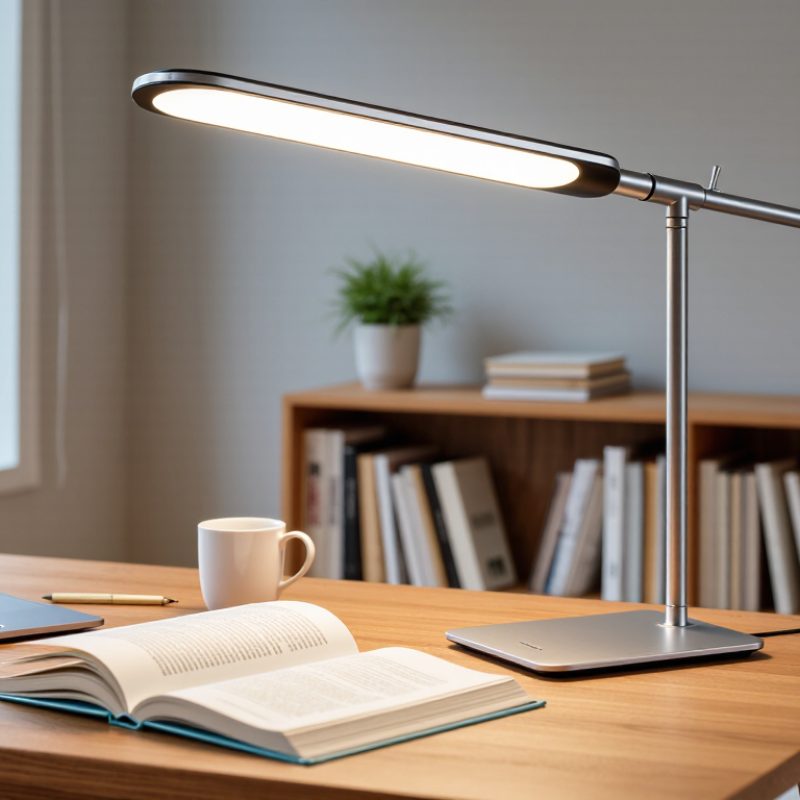
The top natural daylight lamp options in 2026 serve different needs, so “best” depends on your room and routine. A full-spectrum LED desk lamp suits reading, studying, and detailed crafts. Look for a color temperature near 5,000–6,500K, a color rendering index of 90 or higher, and adjustable brightness. A flexible arm helps place light beside your book instead of directly in your eyes. Check the label.
A larger daylight therapy lamp can brighten a dim office or winter morning. Choose a model with clear light-intensity information, UV-free output, stable positioning, and independent electrical safety testing. For personal comfort, begin with shorter sessions and follow the manufacturer’s instructions. These lamps are not a substitute for professional medical advice, especially for people with eye conditions or light sensitivity. Not every lamp works.
A compact clip-on lamp is practical for small desks, bedside reading, or travel. It saves space, but its light may feel narrow and uneven. During practical use, I would check for visible flicker, fan noise, heat around the housing, and glare on white paper. I once preferred a very bright lamp, then noticed eye fatigue after long evening sessions. Brightness alone is not quality. A balanced diffuser, gentle dimming, and an adjustable color setting may matter more. Energy use, replaceable parts, warranty terms, and simple controls also deserve attention before purchase.
What Is the Best Natural Daylight Lamp in 2026?
Comparison of common natural-daylight lamp categories using typical target specifications. Higher illuminance supports brighter task lighting, while a higher CRI indicates more accurate color rendering.
The most suitable option depends on use: a 10,000-lux therapy lamp is designed for bright personal exposure, a high-CRI task lamp is better for reading and detailed work, and a daylight ceiling panel provides broader room illumination. Values represent typical target specifications rather than brand-specific product claims.