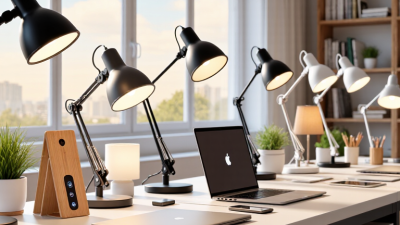
Choosing a desk lamp can seem simple until the light feels harsh, the base crowds your notebook, or the plug does not fit. For global buyers, the right choice depends on work habits, desk space, regional power requirements, and after-sales support. A natural light desk lamp may offer adjustable brightness and color temperature, but labels alone cannot guarantee comfortable lighting. Check the actual specifications and product documentation.
This guide compares ten options using practical details: light adjustment, color-rendering information, stability, controls, and stated warranty terms. Look for a steady beam that illuminates your pages without creating distracting glare on a screen. Comfort is personal. A cool setting may suit detailed tasks, while a warmer setting can feel gentler later in the day. Neither is automatically best for everyone. Also confirm plug type and voltage compatibility before ordering; these details vary by market and model. Small details matter.
Some product listings use phrases such as “eye-friendly” without explaining the testing behind them, so treat broad claims cautiously. The shortlist is a starting point, not a lab ranking, and availability can change. A lamp that performs well on a compact home desk may feel too small in a studio or shared workspace. That is easy to overlook. Use the comparisons to narrow your options, then verify current specifications with the seller before purchase.
Top 10 Natural Light Desk Lamps for Global Buyers?
Understanding Natural Light Desk Lamps and Their Main Types
“Natural light” usually describes a lamp designed to mimic some qualities of daylight; it does not reproduce sunlight exactly. CIE 015:2018 defines standard illuminant D65, representing average daylight at about 6500 K. This reference helps explain why many daylight-style lamps appear cool and white. Common types include fixed-color daylight lamps, adjustable color-temperature lamps, and task lamps with broad diffusers. A cooler setting can make paper look crisp, while a warmer setting may feel gentler in the evening. The label can be fuzzy, though: color temperature alone does not prove color accuracy or comfortable glare control.
For desk work, check light output, beam direction, dimming, and color-rendering information—not just “daylight” on the box. EN 12464-1:2021 specifies 500 lux for many office writing, reading, and data-processing tasks. That is a useful reference, not a guarantee that every home desk needs the same level. A lamp placed close to a glossy page may create a bright reflection even at a modest setting. Small details matter.
Tips: Compare the lamp’s stated illuminance at a specified distance, and test it on your actual desk. Keep the beam off your screen. If the light feels harsh, reduce brightness or adjust its angle before assuming the lamp is unsuitable.
A natural-light desk lamp should make paper look clear without washing out the screen beside it. Color temperature affects the feel of a workspace: cooler light can feel crisp, while warmer light often feels gentler late in the day. An adjustable range is more useful than one fixed setting. Color rendering also matters. A CRI of 90 or higher can help colors appear more accurate, especially when reviewing fabric, artwork, or printed samples.
Brightness alone does not guarantee comfort. Look for smooth dimming, a stable light output, and a head that aims light onto the task rather than into your eyes. Flicker can be difficult to judge from product descriptions, so seek credible test information when available. A broad, diffused beam may soften hard shadows, but it can still create screen glare if the lamp is poorly positioned. Small details matter. No specification replaces checking the setup at your own desk.
Tips: Place the lamp opposite your writing hand to reduce shadows. Start with moderate brightness, then adjust for the page and surrounding room. Compare color temperature in the evening, too; a setting that looks pleasant at noon may feel harsh later. I would not treat “daylight” labeling as a quality guarantee. It is a useful clue, not the whole picture.
Top 10 Natural Light Desk Lamps for Global Buyers?
How to Compare Natural Light Desk Lamps for Everyday Use
When comparing desk lamps, look beyond “natural light” on the packaging. Check color temperature, color rendering index (CRI), brightness, and glare control. A color temperature near 5,000–6,500 K can look like daylight, but it does not guarantee comfortable or accurate lighting. For a practical benchmark, EN 12464-1:2021 specifies 500 lux for many office reading and writing tasks. Measure light on the desk surface, not just at the lamp, since distance and shade design change what reaches your page.
Try the lamp over a notebook and a white sheet of paper. Do colors look clear? Can you read without leaning closer or squinting? A dimmer helps when daylight shifts, while an adjustable arm can keep the beam off a glossy screen. Check for visible flicker, too. Product descriptions may not explain how flicker was tested, so treat vague claims with caution. I would not choose by color temperature alone; I learned that a bright, cool beam can still feel harsh after an hour.
Tips: Compare lamps at the same desk height and brightness. Look for CRI 90 or higher if color accuracy matters, and check the return policy before buying. Small detail, big difference. A lamp that suits one desk may cast awkward shadows on another.
How to Compare Natural Light Desk Lamps for Everyday Use
Compare the lamp’s selectable color temperature (CCT) to find a tone that suits your space: lower values look warmer, while higher values look cooler and more daylight-like. These are common CCT settings, not ratings of specific products. CCT alone does not determine light quality; also check illuminance at the desk, glare control, and color rendering.
For global buyers, the top ten natural light desk lamps are best compared by comfort, adjustability, and local compatibility—not brightness alone. Look for clear color-temperature settings and a high color-rendering index, which can help printed colors appear more natural. A dimmer is useful when daylight shifts or screens dominate the desk. Check the lamp’s rated voltage, plug type, and available replacement parts before ordering. Small details matter.
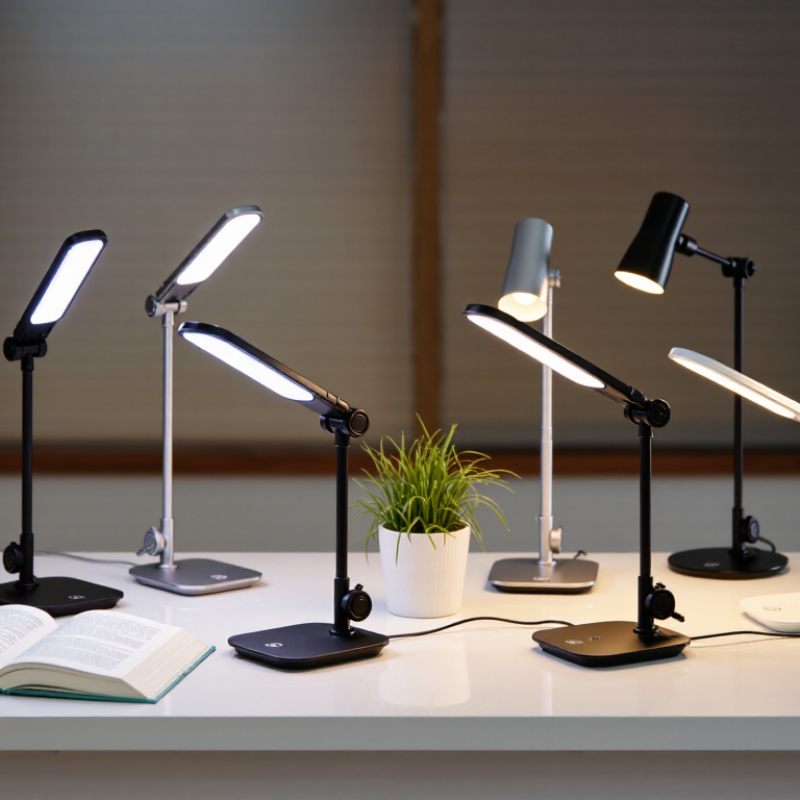
Useful styles include an adjustable daylight LED, a full-spectrum LED, a swing-arm lamp, a clamp-on lamp, a wide light bar, a dual-head lamp, an architect-style lamp, a magnifying task lamp, a rechargeable portable lamp, and a task lamp with softer ambient lighting. Each suits a different workspace. A clamp saves desk space, while a wide bar can cover a larger work area. Magnifying models may help with fine tasks, but they can feel bulky for everyday writing.
Compare glare control, arm stability, and the reach of the light head. A lamp that looks bright in a product photo may still create reflections on a glossy screen. Check independent product specifications where available, and treat vague claims about “natural” light cautiously. No single lamp wins everywhere. Even careful comparisons can miss how a lamp feels after several hours, so prioritize a practical return policy and clear warranty terms.
A natural-light desk lamp should suit the work, not just look bright in a product photo. For a compact home desk, choose an adjustable head that directs light onto a notebook without shining into your eyes. A wide, even beam helps with drawing or reviewing printed pages. For screen-heavy work, place the lamp beside the monitor to reduce harsh reflections. Small detail, big difference.
Compare brightness controls, color rendering, and dimming range before price alone. A high color-rendering index can help colors appear more natural, which matters for design tasks and checking fabric samples. Warm settings may feel calmer in the evening, while neutral daylight tones can be useful for detailed daytime work. Try the controls in person when possible. Product descriptions can be vague.
Budgets and regions change the practical choice. Entry-level lamps may cover basic reading, but check whether the arm stays in position and the lowest setting is comfortable. In shared offices, a stable base and quiet touch controls can matter more than extra modes. Buyers importing across regions should confirm input-voltage compatibility, plug type, and applicable local safety certification. A plug adapter does not change voltage. I would also check replacement-part availability; it is easy to overlook until a dimmer fails.
A practical comparison of representative daylight-style desk lamp configurations, from compact study lights to high-output task lamps.
| Rank | Lamp Type | Typical Light Output | Color Temperature | Color Rendering (CRI) | Power & Input | Best-Fit Workspace | Indicative Price (USD) | Regional Buying Notes |
|---|---|---|---|---|---|---|---|---|
| 1 | Adjustable LED task lamp with wide diffuser | 700–1,000 lm | 3,000–6,500 K, adjustable | Typically 90+ | 8–15 W; check whether the adapter supports 100–240 V | Daily office work, reading, and detailed desk tasks | $35–$90 | A versatile choice for many regions; verify plug type and stated input voltage. |
| 2 | High-CRI color-work desk lamp | 500–900 lm | 4,000–6,500 K, often adjustable | Typically 95+ | 8–18 W; use the supplied or specified power adapter | Illustration, photo review, design, and color-sensitive work | $55–$150 | Useful where color fidelity matters; CRI is not a measure of brightness. |
| 3 | Clamp-mounted LED task lamp | 600–1,000 lm | 4,000–6,500 K, fixed or adjustable | Typically 80–95 | 8–16 W; mains adapter or integrated supply | Small desks, shared tables, and worktops with limited surface space | $25–$80 | Check clamp opening and desk-edge thickness; electrical compatibility depends on the supplied adapter. |
| 4 | Architect-style articulated LED lamp | 500–900 lm | 4,000–6,500 K, depending on configuration | Typically 80–90 | 6–15 W; confirm input voltage on the product label | Technical drawing, reading, and desks needing precise light positioning | $30–$100 | Arm reach and base or clamp mounting can matter more than regional differences. |
| 5 | Compact USB-powered daylight lamp | 250–500 lm | 5,000–6,500 K, usually fixed | Typically 80–90 | 3–8 W; USB supply required, often 5 V | Dorm rooms, laptops, travel desks, and occasional close-up tasks | $12–$40 | Check the required USB output; a computer port or small power bank may not deliver full output. |
| 6 | Wide-panel LED desk lamp | 800–1,400 lm | 4,000–6,500 K, adjustable on some models | Typically 80–90 | 12–24 W; adapter input varies by product | Large desks, dual-monitor setups, and broad document coverage | $45–$130 | Look for a wide, even beam and suitable arm reach; avoid excessive brightness for close work. |
| 7 | Magnifying desk lamp with daylight LED | 300–700 lm | 4,000–6,500 K, fixed or selectable | Typically 80–90 | 5–15 W; mains adapter or integrated supply | Fine crafts, model work, electronics repair, and close inspection | $35–$120 | Compare lens magnification and working distance; these lamps are specialized rather than general room lighting. |
| 8 | Rechargeable cordless LED desk lamp | 150–500 lm | 3,000–6,500 K, often selectable | Typically 80–90 | 3–8 W; rechargeable battery with USB charging | Flexible work areas, temporary setups, and locations without a nearby outlet | $20–$65 | Battery runtime decreases at higher brightness; check charging requirements and replacement options. |
| 9 | Budget gooseneck LED desk lamp | 250–600 lm | 4,000–6,500 K, generally fixed | Typically 80+ | 4–10 W; USB or mains-powered versions available | Students, occasional reading, and compact home-office setups | $10–$30 | Check stability and adjustment range; confirm the power source and plug requirements for the selected version. |
| 10 | Low-glare asymmetric task lamp | 500–900 lm | 4,000–6,500 K, often adjustable | Typically 80–95 | 8–18 W; check adapter input and regional plug | Monitor-heavy workstations where glare control is a priority | $50–$160 | Position and screen reflections vary by desk layout; check return terms if glare performance is uncertain. |
Buying guidance: “Daylight” commonly refers to a cool-white color appearance around 5,000–6,500 K; it does not mean the lamp reproduces natural sunlight. Lumens indicate light output, while color temperature describes appearance. For regional use, check the rated voltage, frequency, plug, adapter certification, and local safety requirements rather than relying on plug adapters alone.